
What Oklahoma VINELink Covers
Oklahoma's statewide victim information and notification service is OK VINE. The Oklahoma Attorney General's Victim Advocacy and Services Unit directs users to VINELink for anonymous custody lookup and confidential notification registration. The result reflects data supplied by a participating reporting agency. It is not one universal record for every jail, prison, court, or detention system in Oklahoma.
An Oklahoma VINE record can report custody wording, an agency or location, an event, and the time the data was updated. A released event means the named custodian recorded a release. It does not prove the case ended, the person completed every sentence, or another agency lacks a hold. A transfer should lead to the receiving custodian's system.
The official VINELink interface provides Oklahoma selection and the “Search for Someone” path.
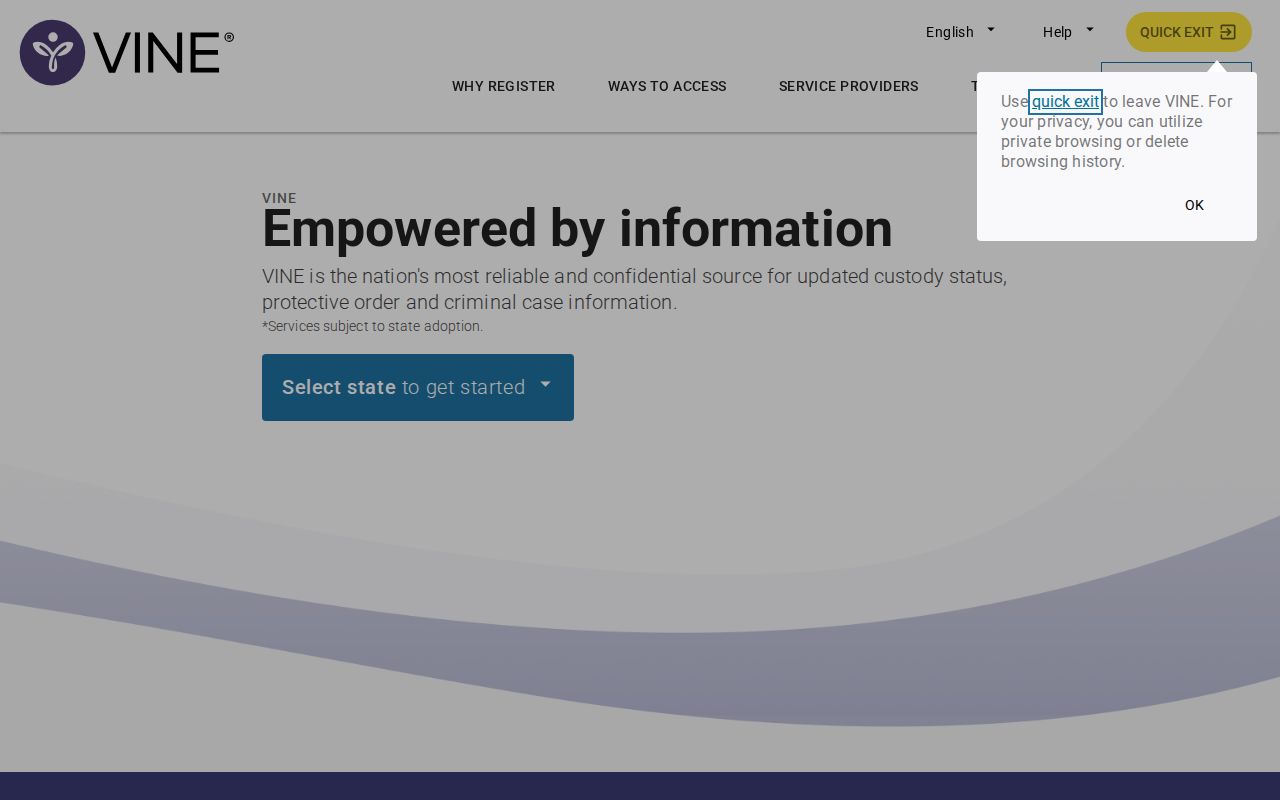
The screen is a starting point for one-person custody checks, not a list of all people released statewide.
A 2021 Attorney General report described enhanced registration intended to follow movements between county jails and DOC. That description does not establish that every municipal jail, tribal custodian, federal agency, or mental-health facility supplies the same feed. When the reporting agency is absent or the event is unclear, use the jail or ODOC record.
Search Oklahoma VINELink Records
Begin with the person's likely custodian. A recent county booking points toward that county's reporting agency. An Oklahoma prison sentence or ODOC supervision points toward the state corrections record. Use an offender ID when it is known. If searching by name, allow for spelling and alias differences, but never combine two people because the names look alike.
- Open VINELink and choose Oklahoma from the state selection.
- Select the person or offender search and enter the exact name or known offender ID.
- Narrow by reporting agency when that choice is offered.
- Open a likely record and compare the identifier, age or birth details shown, and the named custodian.
- Read the status, location or event, and update time together. Preserve the exact words and check date.
A no-result has several possible causes. Spelling, an alias, feed scope, agency participation, data timing, or retention may account for the blank response. Return to the originating agency instead of writing that the person was released. The statewide Oklahoma released inmate search path separates county, state, court, federal, and immigration sources.
Read an Oklahoma VINE Result
Read a VINE result as an agency event report. The most useful fields identify who supplied the record, which person it concerns, what status or event was entered, and when the feed last changed. A field may not appear on every record. Do not invent a scheduled-release field when the live result does not display one.
| Displayed item | How to use it |
|---|---|
| Name and offender ID | Match the person and reduce same-name errors. |
| Age or birth detail | Use only what is lawfully displayed to confirm identity. |
| Reporting agency | Identifies the custodian that supplied the event. |
| Custody or status wording | Record the exact label rather than paraphrasing it broadly. |
| Location or event | Distinguishes custody, movement, release, or another reported change. |
| Update time | Shows how current that particular feed entry is. |
“Released” is custodian-specific. A county may release someone to ODOC, ICE, another county, tribal custody, or a hospital. That is a departure from the county jail, but not proof of return to the community. “Discharged” on an ODOC record generally concerns the end of agency jurisdiction on the relevant sentence and should not be substituted for a VINE event label.
Note: Save the reporting agency, exact event text, and update time before using a VINE result to seek confirmation.
Register Oklahoma Release Alerts
Notification registration starts from the correct person's record. Available delivery choices can include phone, text, email, in-app messages, or TTY. The choices and events offered can vary. Use a private destination that the registrant controls, and keep the confirmation information private.
- Confirm the offender and reporting agency before selecting notification registration.
- Choose the offered events, such as release, transfer, or another custody-status change.
- Select an available delivery channel and enter the private phone number, email, or app destination.
- Complete any PIN or confirmation step required by the service.
- Retain the confirmation privately and update contact details if they change.
The telephone PIN acknowledges an automated call. It is not an inmate PIN. A registrant should not publish the PIN, notification address, phone number, or email. Automation can fail or arrive after an event, so a VINE message should be paired with the responsible agency when timing matters.
- Custody event
- A status or movement update supplied by the participating custodian.
- Transfer
- A move to another agency or location, not necessarily a community release.
- Release alert
- An automated notice that the reporting custodian entered the offered release event.
- Confirmation PIN
- A private code used to acknowledge a phone notice, not an offender identifier.
Oklahoma Custody and Parole Notices
Oklahoma has three distinct notice lanes. The Oklahoma Pardon and Parole Board expressly states that VINE custody notification does not replace the Board's parole-notification process. A custody change and a parole proceeding are different events, kept by different systems.
| Lane | Purpose | Key limit |
|---|---|---|
| OK VINE | Available custody events from participating agencies | Not a substitute for PPB hearing notice |
| ODOC Victim Services | Human support for state-custody movement and release information | Applies to the ODOC lane |
| PPB victim services | Registration concerning parole proceedings | A Board event is not physical release |
The official PPB Board Meetings archive shows the separate calendar for parole and special proceedings.
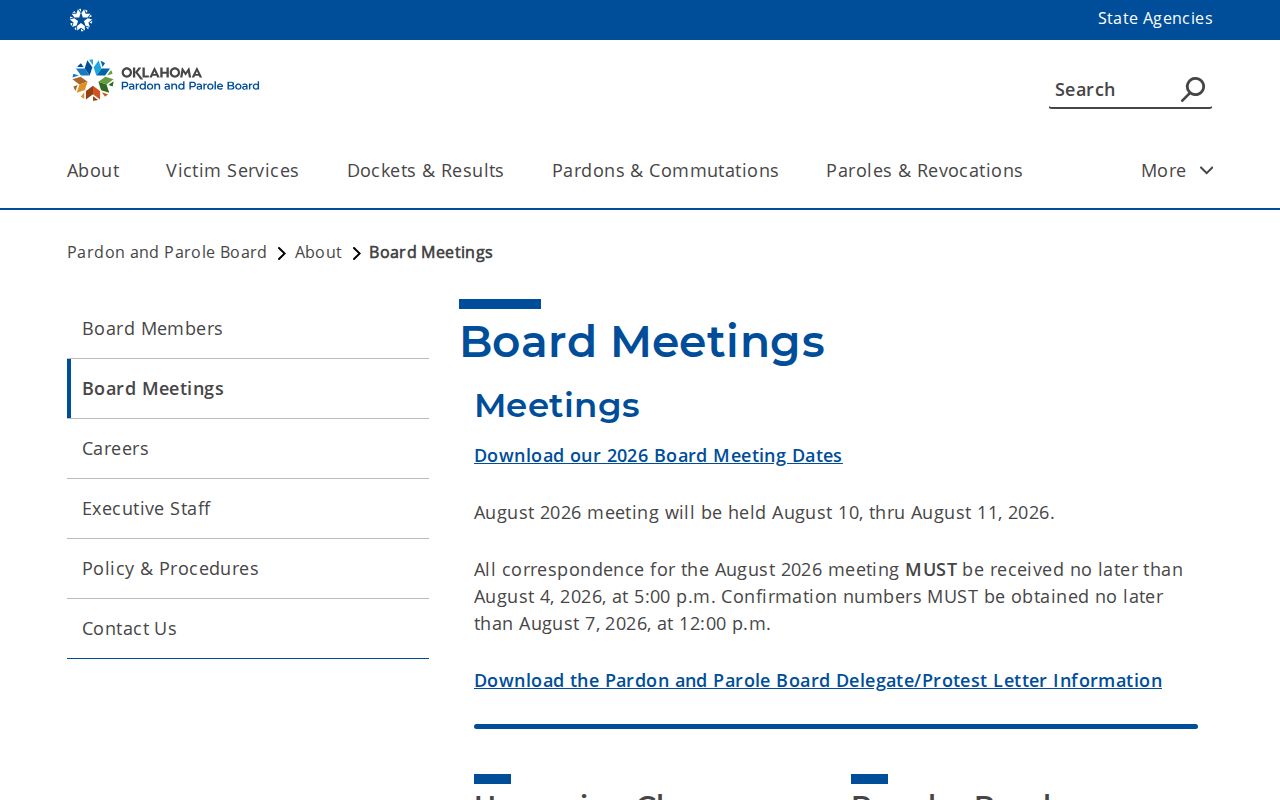
This calendar can establish when Board business is planned, but VINELink remains the participating-custodian event channel.
A favorable PPB result also does not prove that ODOC released the person that day. Conditions, placement, required action, and agency processing may remain. Read the results document, then check ODOC for the later status movement.
Oklahoma's Mental-Health Alert Gap
ODOC's current Victim Notification Request identifies transfer, escape, apprehension, release, and death as VINE events. It also documents a specific limit: after transfer from ODOC to an Oklahoma Department of Mental Health facility, VINE is no longer activated until the person returns to ODOC custody. That gap makes custodian tracking essential.
A transfer notice should prompt the reader to identify the receiving system, not assume release. During the described mental-health placement, absence of a new VINE event does not prove that nothing changed. ODOC Victim Services is the human support lane for state-custody movement and release information, subject to lawful access limits.
The official ODOC offender lookup is the state-corrections status source used alongside VINE.
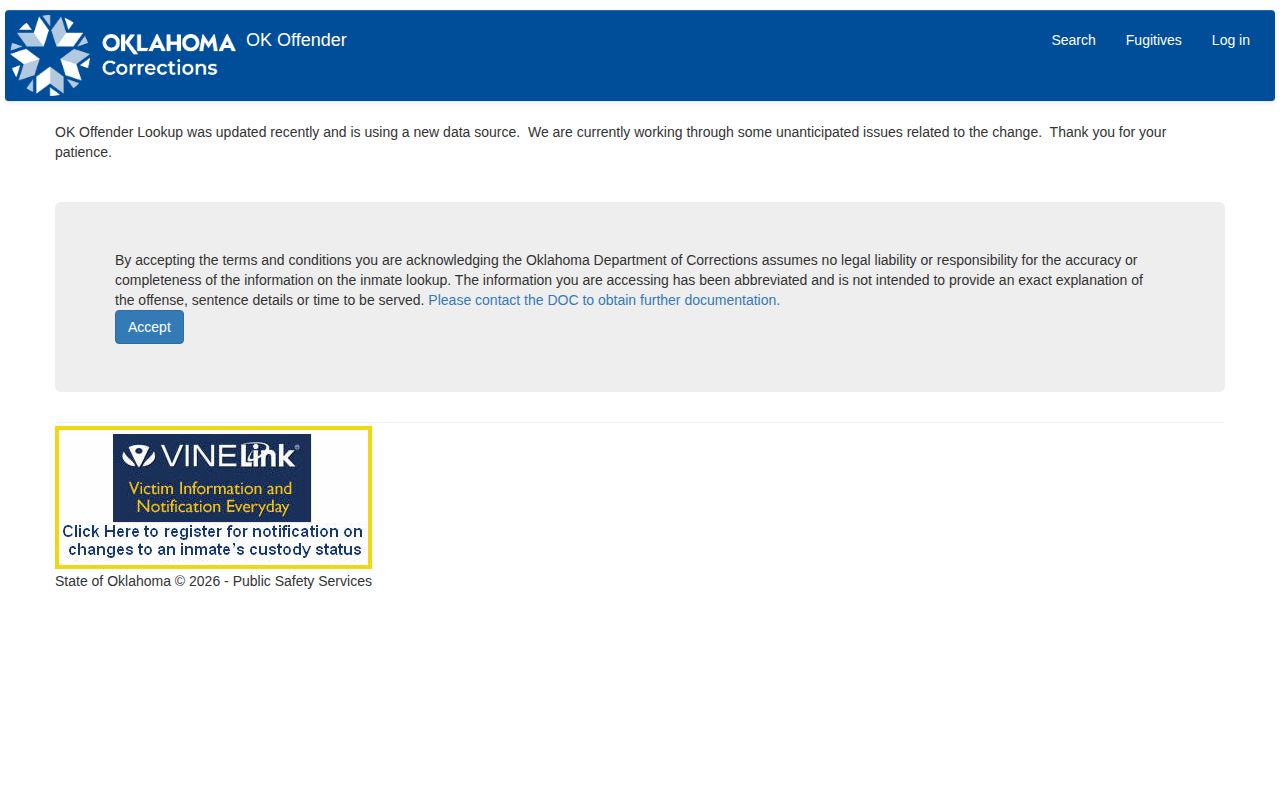
The profile can help identify state custody or supervision, but its abbreviated data still requires careful reading and agency confirmation.
Note: A mental-health transfer creates a documented VINE interruption, not proof of discharge from the underlying Oklahoma sentence.
Federal Limits on Oklahoma VINELink
VINELink is not the federal Bureau of Prisons locator. For a federal prisoner, use the BOP Inmate Locator with a register number when known, or search by name and its age, race, and sex filters. BOP says online locator records generally cover federal inmates from 1982 forward. A result may show identifying details, a release date, and a location or status concept.
The official BOP locator illustrates the separate federal channel for an Oklahoma custody question.
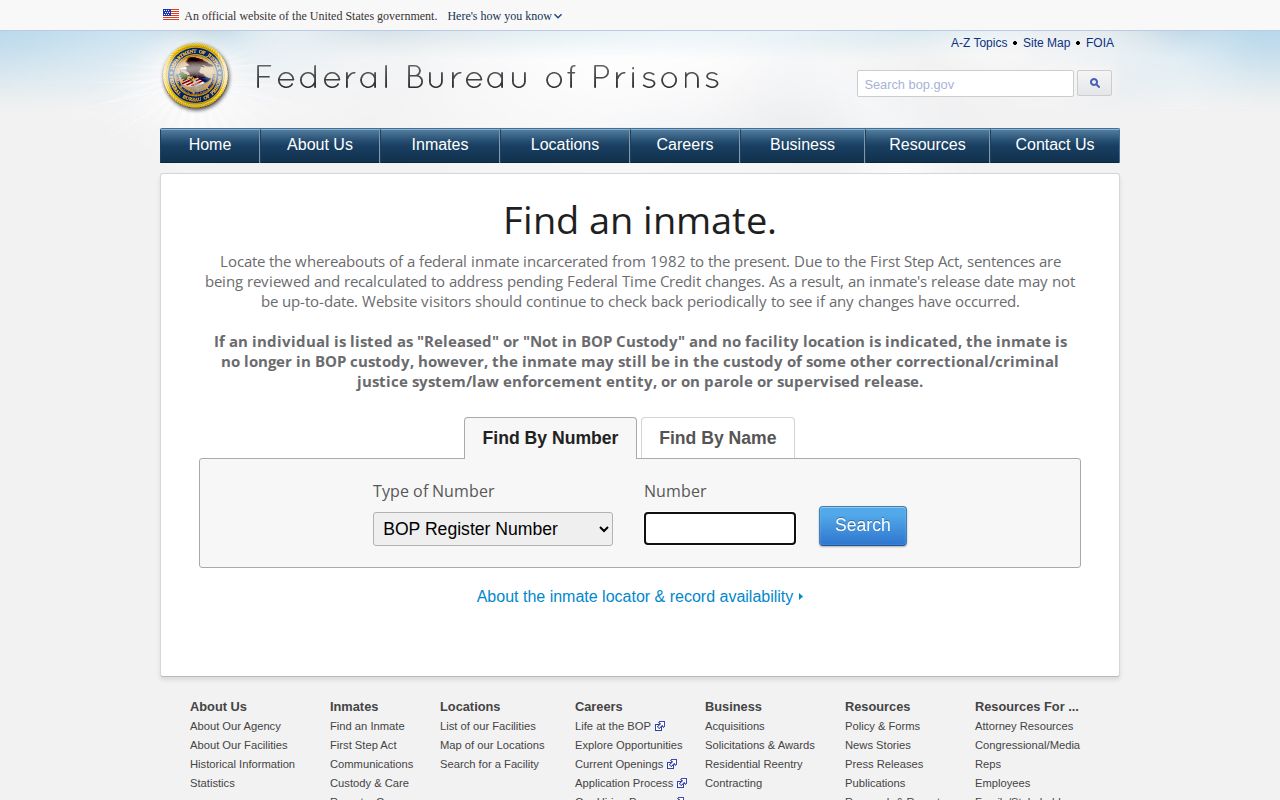
“Released” or “Not in BOP Custody” means the person is not presently held by BOP. It does not rule out supervised release, state or local custody, ICE custody, or an older record outside online coverage.
ICE also has its own present-custody locator. The Online Detainee Locator System can search with an exact nine-digit A-number and country of birth, or biographical fields. Its scope covers a person presently in ICE custody or in CBP custody beyond the stated processing window, and it does not search people under 18. Intake lag and safety exclusions mean a blank result is not release proof.
Confirm an Oklahoma VINE Release
Use the reporting agency named in the VINE record. For a county jail event, request the existing booking and release entry, including actual release date and time, manner of discharge, and receiving agency if the person transferred. A current jail roster is built for present custody and may drop a person after departure, so the missing name is not the historical record.
For ODOC, compare the public profile with a Certificate of Release, Notice of Inmate Status Change, discharge record, or Closed Records response when formal proof matters. The ODOC offender search explains how community supervision and discharge differ. A PPB decision shows Board action, while an OSCN court docket shows legal events. Neither should be relabeled as the later physical release.
Keep each source's exact words. Record the agency and lookup time. If a VINE event and agency record differ, ask the named custodian to resolve the discrepancy. Do not infer acquittal, case closure, or sentence completion from a release alert alone.
Use a fallback chain when an alert does not arrive. First, reopen the correct record and check whether registration remains active and contact details are current. Next, verify that the chosen event was available for that reporting agency. Then check the custodian's own record. An unreceived message may reflect contact settings, an event the agency did not offer, a feed delay, or an agency outside the service's scope.
Time labels also need care. The update time marks the feed entry, while the event may have occurred earlier. A phone or text delivery time is later still. Preserve all three when they are available. That simple timeline helps the custodian resolve a mismatch without turning notification lag into a claim about when the person walked out.
If the source says transfer, ask which agency received the person. County release to ODOC should move the check to the state offender record. Release to ICE should move it to the immigration custody lane. A hospital or mental-health transfer requires the responsible state channel, with the documented VINE interruption kept in mind. The word “release” must remain attached to the agency that entered it.