
Oklahoma Parole and Probation Compared
Both parole and probation can place a person in the community under Oklahoma Department of Corrections supervision. They do not prove the same prior event. Parole is conditional release during a prison sentence. The Oklahoma Pardon and Parole Board acts on parole matters, ODOC processes the later custody change, and ODOC Probation and Parole Services supervises the person after release. Probation is imposed by a court, often as a suspended part of a sentence. It may follow jail or prison time, or it may start without either. A court docket can therefore be vital when the profile alone does not explain how probation began.
The controlling status matters more than a broad label such as “out.” Someone can live outside a prison while on parole, probation, community sentencing, GPS supervision, or another ODOC status. A person in a community-corrections placement may still be in physical custody. Conversely, the end of active office reporting does not always mean the sentence has discharged. Read the precise agency term and the sentence to which it applies.
| Point | Parole | Probation |
|---|---|---|
| How it starts | Conditional release during a prison sentence after the parole process | A sentence or order entered by an Oklahoma court |
| Decision source | PPB action, with later ODOC release processing and any required executive action | The sentencing court |
| Public verification | ODOC profile, PPB result, and assigned ODOC office | ODOC profile, court docket, and assigned ODOC office |
| End point | Discharge or other sentence-ending action, not merely inactive reporting | Court and agency completion process for the controlling sentence |
- Parole
- Conditional release from physical prison custody while the sentence and supervision remain active.
- Probation
- Court-ordered community supervision, often tied to a suspended sentence.
- Absconder
- A person officially alleged to have stopped complying with required supervision contact or location rules.
- Discharge
- The end of ODOC jurisdiction on the sentence identified by the record.
Verify Oklahoma Post-Release Supervision
The OK Offender Lookup is the first statewide check when there is reason to think ODOC supervises the person. Search by ODOC number when possible. A number avoids many same-name errors. If only a name is known, compare the photograph, age or birth details shown, offense and county information, and sentence facts. Do not merge two profiles on a name alone. A county jail release may never create an ODOC supervision record, so first confirm that the sentence or transfer reached the state system.
Use this sequence to answer whether a released Oklahoma person is on parole or probation:
- Establish the likely custodian and sentence from the county release record or court case.
- Search OK Offender Lookup by ODOC number, or use the exact name and carefully compare identifiers.
- Open the profile and read the current status, location or supervision concept, and each relevant sentence.
- Distinguish probation, parole, community sentencing, GPS placement, incarceration, inactive status, and discharge.
- Use the ODOC field-office directory to locate the office serving the listed county, then ask only for public status clarification.
- Check the court docket or ODOC records channel when the profile and known sentence do not agree.
The official ODOC lookup screen shows the statewide name and ODOC-number entry path.
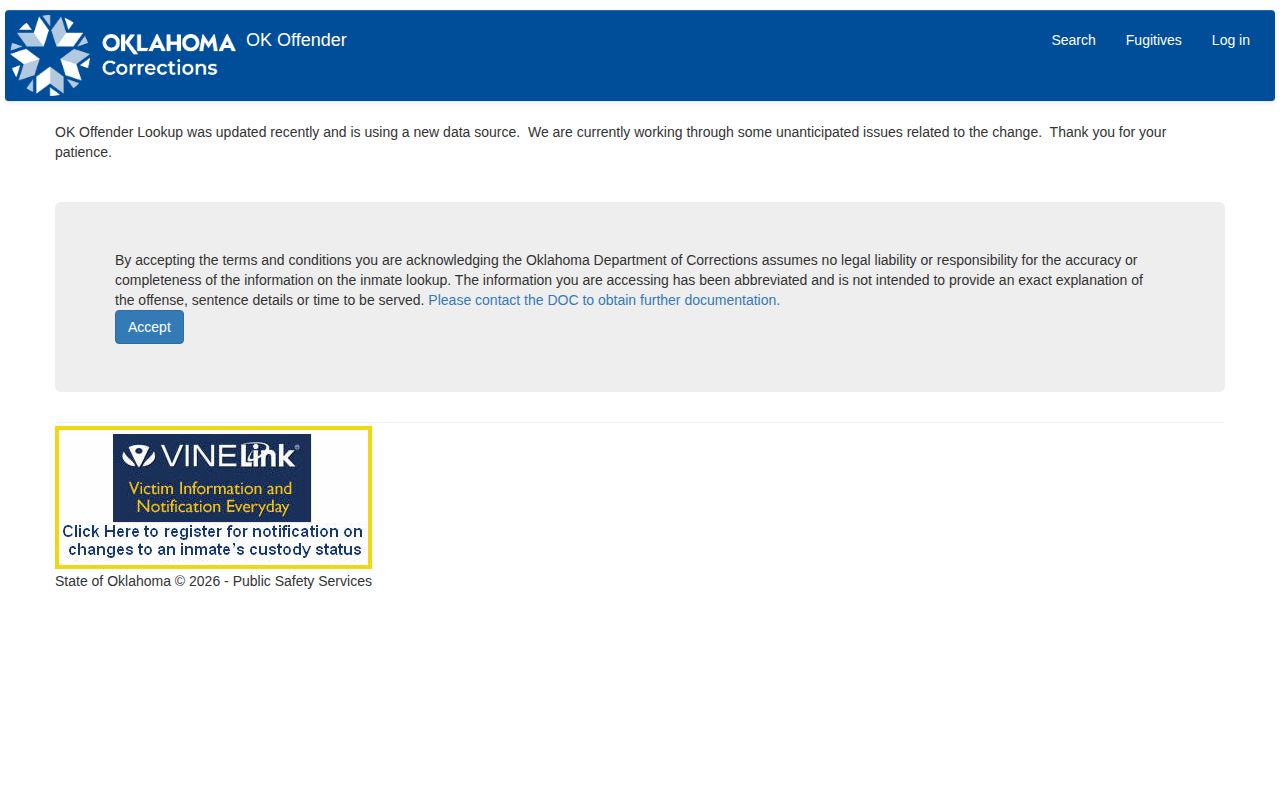
Its terms and search fields should be read before a profile status is treated as an official snapshot.
Note: A blank ODOC result can reflect spelling, aliases, or public-display limits and does not prove that no state record exists.
Read Oklahoma Supervision Profiles Carefully
An ODOC profile can separate incarceration, community supervision, and discharge, yet public fields vary by person and status. Start with identity. Then read current status before any date. “Probation,” “parole,” or another community category means the person can be outside prison but still under state authority. “Inactive” must be read with the sentence history and agency notices. A discharged sentence may coexist with another open case, sentence, or hold. No official source reviewed for Oklahoma promises that all discharged profiles remain public for a fixed period.
The distinction also affects which document to seek. A PPB result proves a Board action. It does not prove the person later walked out of a facility. A court judgment proves a legal sentence. It does not show each supervision contact or the exact end of ODOC administration. For a firm agency record, request the narrow existing status, termination, or discharge document rather than an undefined full file. The ODOC offender-records policy explains active and closed file routing.
The ODOC Offender Info page links the lookup and explains the agency’s record channels.
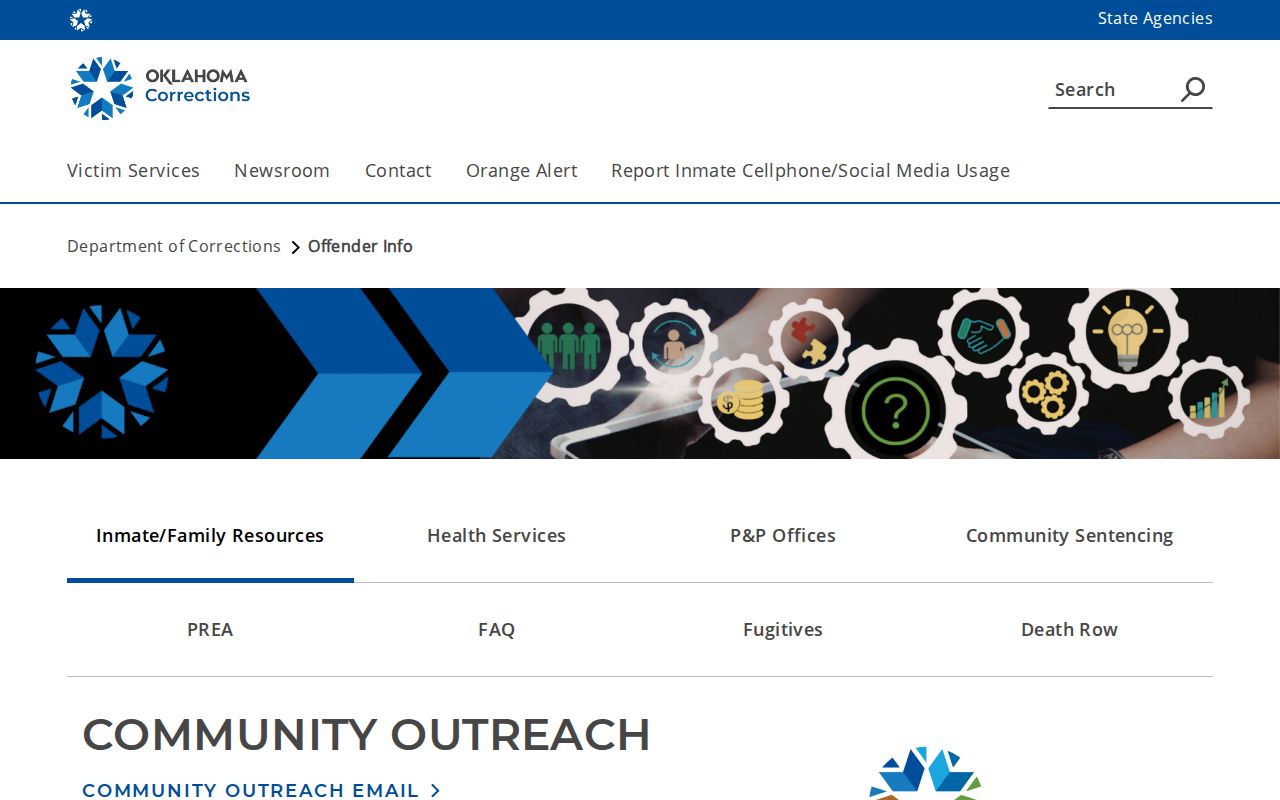
This official screen reinforces why a public field is a dated status view, not a promise about every later change.
Oklahoma Probation and Parole Offices
ODOC Probation and Parole Services, not the Pardon and Parole Board, runs statewide community supervision. Its official page provides the field-office directory by area and lists program contacts for community sentencing, GPS, the parole process, Interstate Compact, and warrants. Oklahoma has many field offices, so a single statewide street address would misroute most readers. Use the directory and the profile’s county or office information to identify the right public contact.
State Supervision Contact
Oklahoma Department of Corrections
Probation and Parole Services
Statewide field-office and program directory
Find the assigned ODOC office
Ask a focused question. Supply the full name and ODOC number, identify the status wording and lookup date, and state the public discrepancy that needs to be resolved. Do not seek or publish a home address or private reporting schedule. If the record instead concerns whether the Board considered parole, use the PPB docket and results archive. The Oklahoma parole hearings record explains that separate decision trail.
The official ODOC site identifies the agency responsible for the lookup and statewide supervision services.
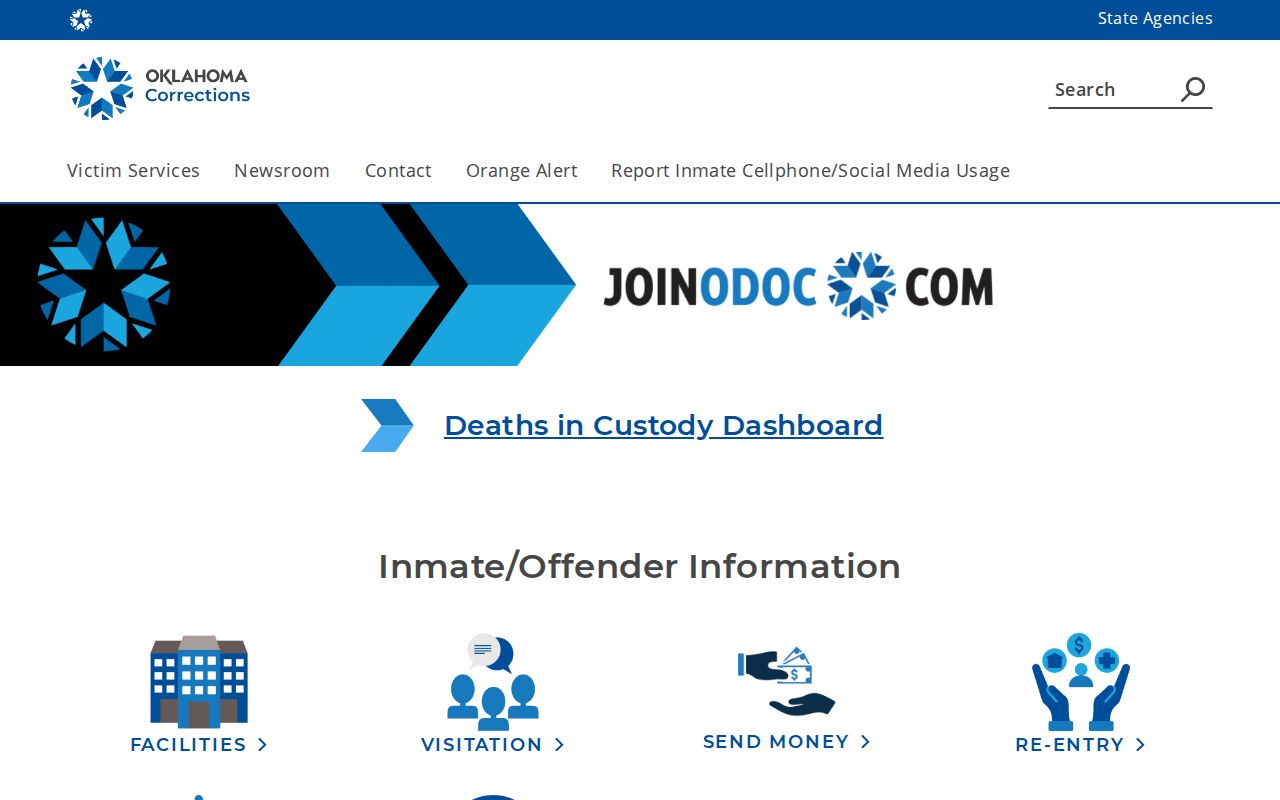
Use its agency links to avoid confusing PPB decision records with the ODOC office that supervises a released person.
Oklahoma Absconder and Warrant Status
The supervision page also links an “ALL FUGITIVES” search. This is a special warrant path, not a list of all released people or all people under supervision. Use it only when the official system identifies a fugitive or absconder issue. A profile’s supervision label alone does not mean there is a warrant. Likewise, failure to find a name on that list does not cancel an agency notice, court warrant, or case entry.
An alleged supervision violation is not automatically the same as absconding. A court docket may show an application to revoke a suspended sentence or accelerate a deferred sentence, while ODOC may hold a separate supervision or warrant record. Read the filing, order, and profile as separate evidence. A filed application shows that relief was requested. It does not establish the court’s later ruling. If a person has returned to custody, verify which agency holds that person rather than assuming the old community status still controls.
ODOC lists the Fugitive Warrants Division at 405-425-2570 or 405-425-2571, toll-free at 866-363-1119, and by email at warrants@doc.ok.gov. Report the exact official record and identifier. Never attempt to locate, confront, or apprehend someone. Urgent safety concerns belong with the proper authorities. A warrant can change how a person’s community status is described, but it does not rewrite the prior release event.
Note: Confirm the ODOC number before acting on a name because an identity error can send a warrant question to the wrong record.
Oklahoma Interstate Supervision Transfers
Living in another state does not, by itself, show that Oklahoma supervision ended. The Interstate Commission for Adult Offender Supervision creates the transfer framework, and ODOC’s Interstate Compact Unit oversees Oklahoma’s incoming and outgoing cases. The person may report to an office elsewhere while the underlying Oklahoma sentence and sending-state interests remain active. Geographic absence is therefore weak proof of discharge.
Start with the ODOC profile and assigned office. Ask whether the public status reflects an interstate transfer and which agency is the proper source for current supervision confirmation. Do not infer a private address from the receiving state. Interstate supervision is also distinct from a transfer into federal, tribal, ICE, or another state’s physical custody. Each receiving system answers its own custody question.
The OSCN statewide docket search can add the Oklahoma court case, sentence, and later filed orders.
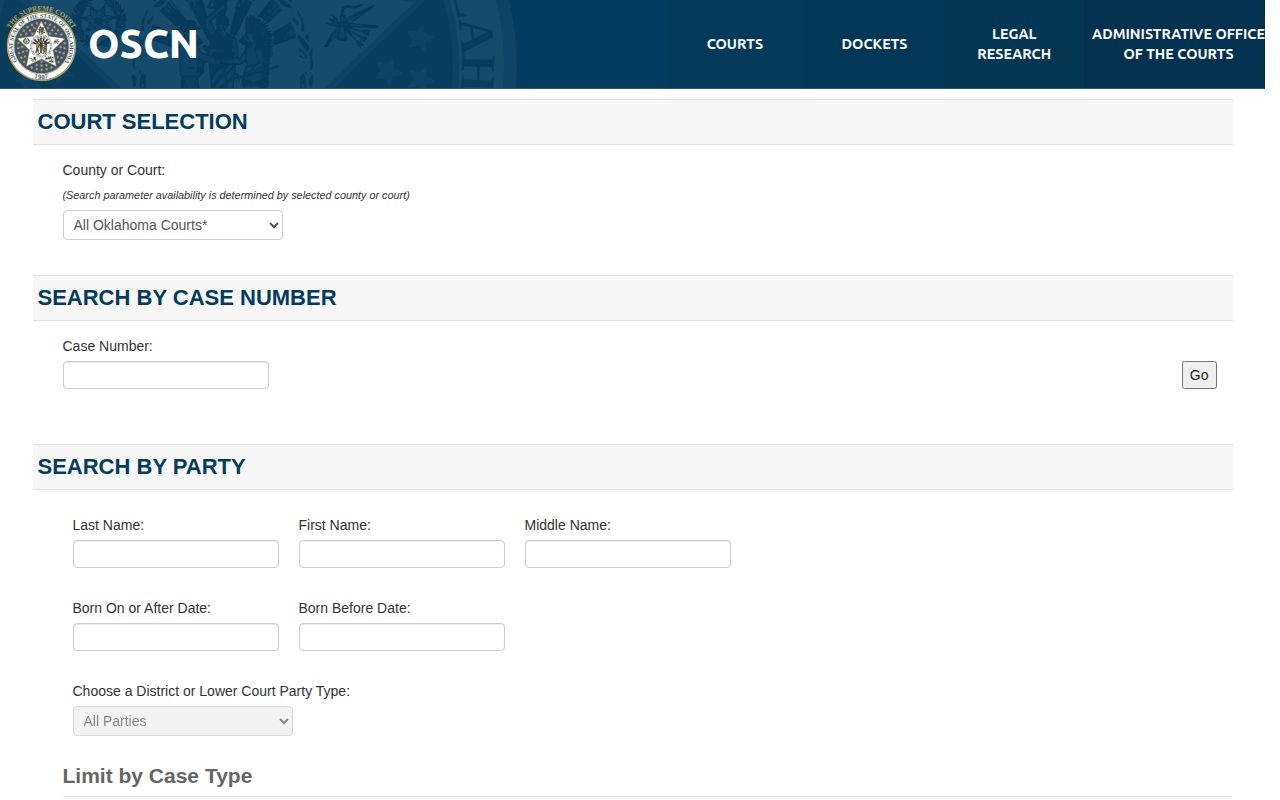
OSCN warns that its web display is not the certified court record, so obtain the formal record from the clerk when needed.
Oklahoma Supervision Status Snapshot
ODOC’s July 28, 2025 Daily Statewide Population Report counted 22,780 people in community-supervised categories on that date. The report separated 17,603 probation cases, 2,978 parole cases, 2,068 community-sentencing cases, and 131 GPS-inmate cases. Those categories show why “released” is too broad to describe a person’s state status. Each group reflects a different legal or correctional lane, even though the person may be outside a prison.
This was a one-day operational count. It was not an annual total of unique people, and it should not be used to estimate how many individuals began or ended supervision during the year. For a person-level check, return to the live profile and assigned office. The snapshot instead gives useful statewide context: probation formed the largest listed group, parole was a smaller and distinct group, and community sentencing and GPS placement could not be folded into either label without changing the record.
Status can also shift after the count date. A person might discharge, move to an inactive reporting level, transfer through Interstate Compact, face revocation proceedings, or enter another custody category. Cite both the category and report date whenever this statewide figure is used.
Note: Statewide supervision counts describe agency caseload categories on one date and do not establish any named person’s current status.
How Oklahoma Supervision Ends
Stopping office visits is not proof of discharge. ODOC policy OP-160201 describes a case-closing sequence after notice and receipt of a completed discharge certificate from the records unit. The supervising officer obtains the person’s signature and closes the case in ICON, ODOC’s internal information system. That sequence ties closure to the controlling sentence and records process, not to a guess based on time or a missing public result.
The agency’s Section 16 forms sharpen the distinction. ODOC lists a Notice of Termination of Active Probation Supervision and an Inactive Parole Supervision Notice as separate forms. “Inactive” can describe the reporting level while jurisdiction or a sentence remains. “Discharge” addresses the end of ODOC authority on the identified sentence. When proof matters, note the exact form title, sentence, effective date, and issuing office.
A discharged ODOC status also does not erase the related court case. Oklahoma expungement has its own court process under state law. The statewide Oklahoma released inmates search separates the corrections status, court record, and physical release event so those records are not collapsed.
Keep copies of the profile snapshot and final agency document with their access dates. A later public display may use different status wording.