
Oklahoma Release Dates Explained
Several dates can appear around one Oklahoma sentence. The projected release date is ODOC's current estimate after it applies known sentence and credit information. A parole eligibility date only marks when a person may be considered for parole under the controlling law. The maximum or sentence-end date marks another boundary. None of these is the same as the physical time that a prison or jail completes identification, property, hold, and movement checks.
A county court order can authorize release before jail staff complete local processing. A favorable parole decision can come before ODOC carries out the later custody change. Likewise, the end of physical prison custody can lead to parole or another community-supervised status rather than full discharge. Discharge generally means ODOC jurisdiction ended on the relevant sentence. Each label must be tied to its source and date.
A pretrial detainee presents a different case. Someone held before judgment has no ODOC sentence calculation to search. Bond, a court order, dismissal, transfer, or later sentencing may control the next step. For a county sentence, the local jail record and court docket are the sound starting points.
Search Oklahoma Projected Release Dates
The Oklahoma Department of Corrections, known as ODOC, operates OK Offender Lookup for people in its correctional and supervision systems. Search by ODOC number when it is known. A name search can return more than one person, so compare the photograph, age or birth details shown, offense geography, status, and sentence information before using a date.
The official OK Offender Lookup screen shows the statewide search route.
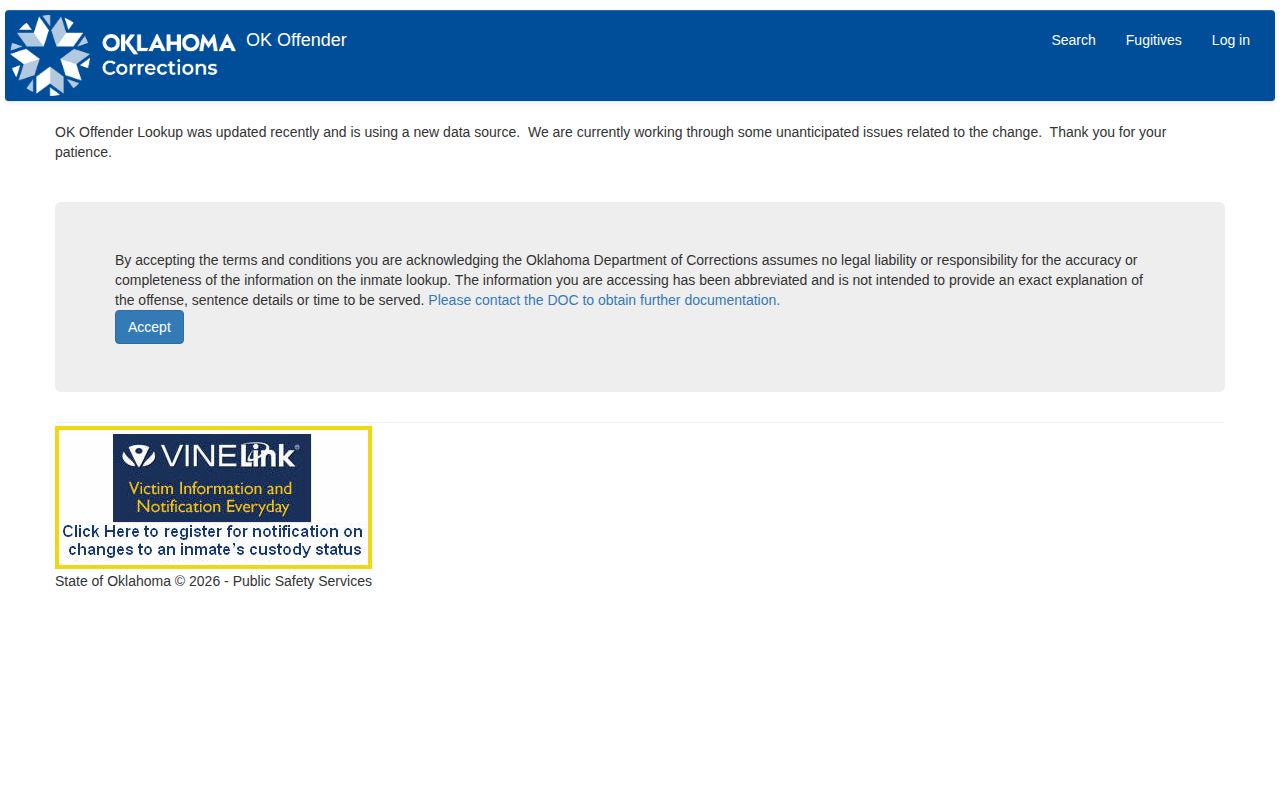
The portal is an abbreviated official status snapshot. Its own warning means the displayed record should not be treated as a full sentence explanation.
- Decide whether the person is in an Oklahoma county jail, ODOC custody, federal custody, or another system.
- For an ODOC record, open the lookup and accept the portal terms. Use the ODOC number if available.
- Confirm identity across several fields, then read current status and location before reading any projected date.
- Record the exact field label, displayed value, and lookup date. Do not turn a blank field into a date.
- Check sentence and offense entries for separate counts, then seek an official record when documentary proof is needed.
The deeper ODOC offender search explains former-offender status and discharge records. A county-only booking may never become an ODOC profile, so county jail records and the controlling court docket remain essential for local custody.
Note: A missing ODOC result does not establish release, and a present profile does not mean the person remains inside a prison.
Oklahoma County Release-Date Sources
County custody requires a local path because ODOC does not calculate a date for every jail stay. A person held before trial may leave on bond, recognizance, dismissal, or a court order, or may move to another custodian. Someone serving a county sentence may have time-served and jail-credit issues that the local court and jail record explain. The County Directory identifies the locality, but the actual custodian remains the source of the physical event.
Start with the criminal docket to identify the county, case number, judgment, sentence, awarded jail credit, and later orders. OSCN can show many state-court events, yet its web display is not the certified court record. Municipal and tribal cases may use other systems. Then ask the jail or sheriff for the existing booking and release record, including actual date and time, manner of discharge, and receiving agency if transferred.
The two records answer different questions. A judge's order supplies legal authority. The jail's movement entry shows when staff completed the release or transfer. A roster that no longer displays the name supplies neither fact by itself. County systems also differ in how long they show former detainees, so silence should lead to a records request rather than a guessed date.
A state-prison sentence follows ODOC's computation path. A federal sentence belongs in the BOP locator and federal court record. Immigration detention belongs with ICE. Custodian-first routing keeps one agency's projected field from being applied to a sentence it does not manage.
Oklahoma's Public-Date Paradox
An applicable public profile may display the exact field name “Projected Release Date.” At the same time, the ODOC Offender Info FAQ says the exact future release date is confidential unless there is a legitimate need. It also says the inmate receives the number of days remaining each month and may ask a facility records officer or case manager for help. These points are not a license to derive or publish a confidential day.
The same FAQ explains why a public field is not a promise. Earned-credit level, misconduct, and achievement credits can change a calculation. The safest reading is literal: report only the field and value that the official profile displays at the time checked, label it projected, and do not add an arrival time or release plan.
The official ODOC projected-date explanation documents both the availability of a profile field and the limits on exact future dates.
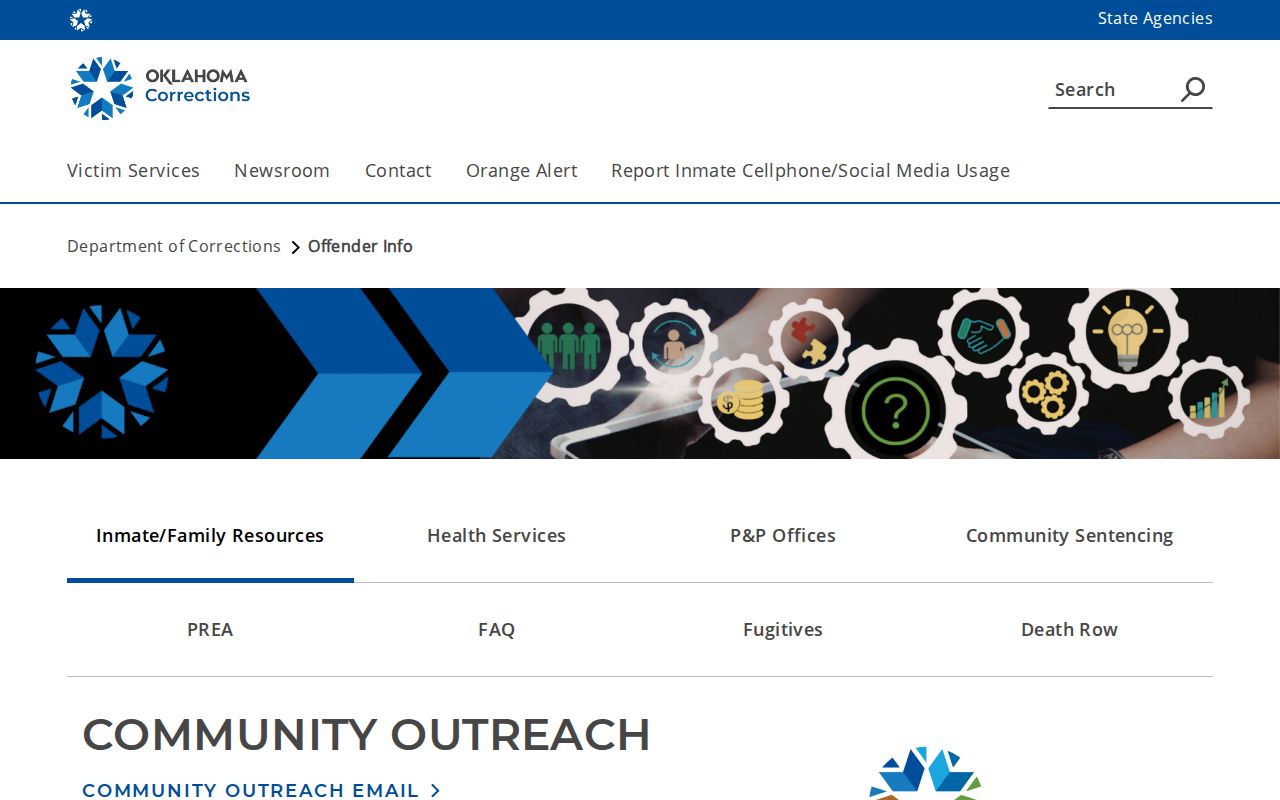
This official screen is the key Oklahoma distinction: a visible data point remains tentative and may not reveal every part of sentence administration.
- Projected release date
- ODOC's current calculated estimate based on sentence and credit data then known.
- Actual release
- The physical custody event later entered by the releasing agency.
- Parole eligibility
- The point when parole consideration may occur, not a promise of approval or release.
- Discharge
- The end of ODOC jurisdiction on the sentence identified in the record.
Oklahoma Earned Credits Affect Release
Oklahoma's central earned-credit statute is 57 O.S. § 138. It creates credit classes and governs who may earn credits, class rates, added achievement credit, exclusions, loss, and possible restoration. ODOC policy OP-060211 administers those rules. The current version that applies to the person and offense must control.
Credit is not a flat number that can be subtracted once. A person's level can change. Misconduct or failure to perform may cost credit, while later agency action may restore eligible credit. Jail credit awarded for qualifying time before sentence is a different input. Concurrent sentences run together in a way defined by the judgment, while consecutive sentences run one after another. Other holds can affect physical release even after one calculation reaches its end.
| Calculation input | Why it matters |
|---|---|
| Conviction and offense date | They identify the governing statute and version. |
| Sentence start and jail credit | They establish credited time before later earned credits. |
| Credit class history | Class changes can alter the rate across the sentence. |
| Achievement credits | Eligible awards can change the projected calculation. |
| Loss or restoration | Discipline and later restoration can move the estimate. |
| Sentence structure | Concurrent and consecutive counts affect the controlling end date. |
The ODOC projected-release worksheet illustrates how sentence and credit inputs interact. It is useful for understanding the process, not for publishing a home-built calculator. A sentence length alone cannot yield a safe calendar date.
Oklahoma's Listed 85-Percent Offenses
The Oklahoma 85-percent rule is precise, not universal. 21 O.S. § 13.1 lists offenses for which a person must serve at least 85 percent of the sentence of imprisonment before parole consideration. Credits also cannot reduce imprisonment beneath that statutory floor. The list, relevant offense date, and exact conviction statute must be checked.
It is wrong to apply the phrase to every felony or to every offense casually called violent. The statute also addresses attempts, conspiracies, and solicitations. A parole rule answers when consideration may begin. It does not by itself calculate a projected discharge date, state when staff will finish release processing, or resolve another active count.
A ten-year sentence can illustrate a percentage, but it still cannot supply an actual release day. Sentence commencement, awarded jail credit, consecutive counts, later court orders, statutory changes, and separate holds may all matter. Oklahoma's enumerated list should therefore be checked before earned credits and parole timing are discussed.
The official PPB dockets and results archive records parole proceedings after eligibility rules are applied.
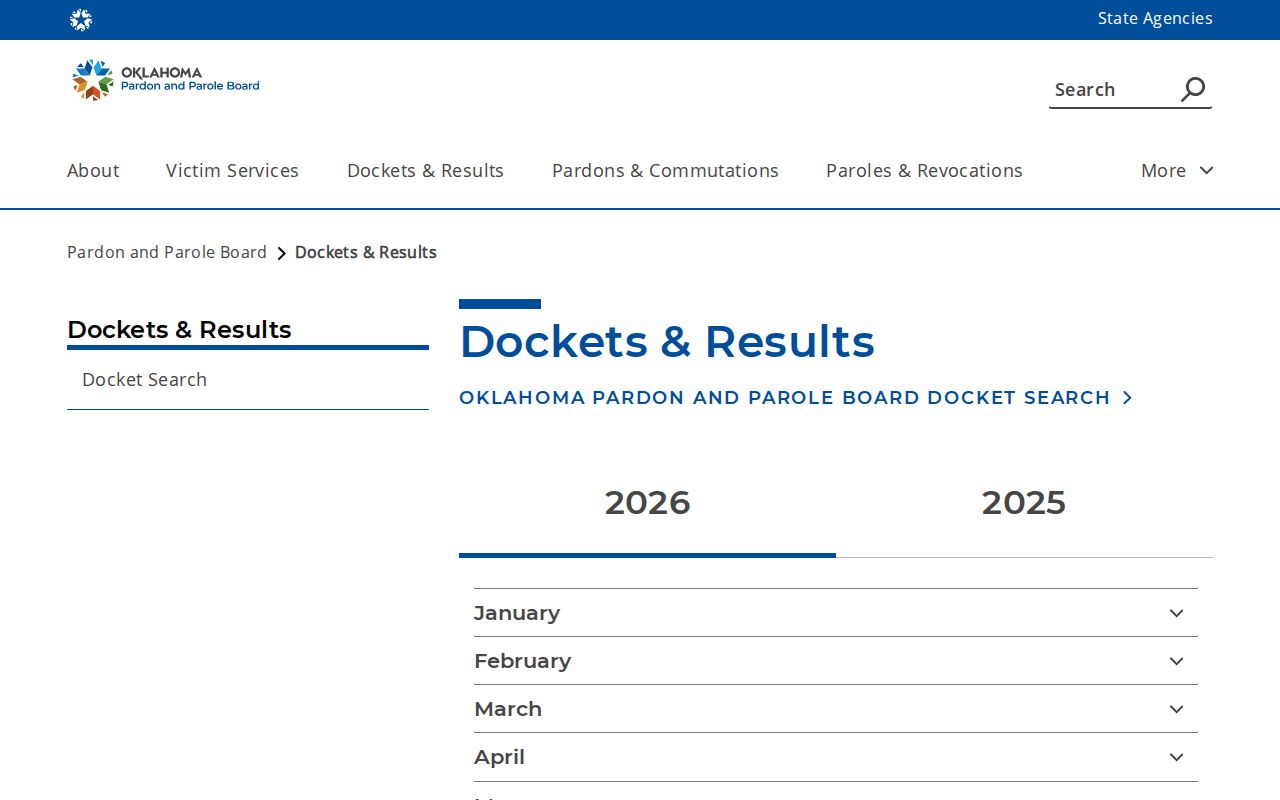
A docket entry shows scheduled consideration, while a results document shows Board action. Neither one is the later ODOC gate event.
Note: Match the conviction statute to the current legal text before applying an 85-percent floor to any Oklahoma release estimate.
Why Oklahoma Release Dates Change
A projected value can move because its inputs or legal setting change. Sometimes the calculation changes while custody stays the same. In other cases, the sentence reaches a point where a separate hold prevents release to the community. The record must say which event occurred.
| Event | Possible effect | Best check |
|---|---|---|
| Credit class change | Changes the rate used in the estimate | ODOC sentence record |
| Misconduct or nonperformance | May cause eligible credit loss | ODOC credit history |
| Credit restoration | May move the estimate earlier | Authorized ODOC record |
| Achievement credit | Adds credit when law and policy permit | ODOC computation |
| Court order or corrected judgment | Changes a controlling sentence input | Certified court record |
| Detainer or other hold | May route the person to another custodian | Originating and receiving agencies |
| Parole action | Changes eligibility or status, not automatically the gate date | PPB result followed by ODOC |
A detainer is a request or legal basis for another authority to hold or receive the person. A departure to another county, federal authority, ICE, tribal custody, or a hospital is a transfer until the records show otherwise. “Out” from one system does not settle custody in all systems.
Parole also has two stages that are often collapsed. The Oklahoma Pardon and Parole Board's docket and results archive shows consideration and Board action. ODOC then handles the later status and custody movement. A result may involve conditions, placement, or further action in the cases governed by those procedures. Check both dates and keep their labels separate.
If a projected value has changed, preserve an earlier dated capture only as a historical snapshot. The current ODOC record or authorized sentence computation should explain the present estimate. Do not splice a date from an old profile into a newer status record.
Confirm an Oklahoma Release Event
Confirmation starts with the same agency that held the person. For ODOC custody, compare the later profile status with the applicable Certificate of Release, Notice of Inmate Status Change, discharge record, or Closed Records response. For county custody, seek the jail's actual release date, time, manner of discharge, and receiving agency when transferred. A court docket can explain the order, but not the precise doors-out time.
The official Oklahoma Department of Corrections site identifies the statewide agency behind the profile and record channels.
Use the agency identity shown here to avoid confusing an ODOC sentence record with a county jail, federal, or immigration custody result.
OK VINE may supply an event notice from a participating custodian, but automation is not a guaranteed legal notice. The Oklahoma VINELink check explains registration and its limits. Record the time each source was checked and preserve its exact words. If a projected date passes, verify current lawful status rather than assuming release or agency error.
When a formal record is needed, request a narrow existing document. ODOC policy identifies a Certificate of Release and a Notice of Inmate Status Change in sentence administration. A terminated-jurisdiction file can be routed through Closed Records. Asking for the named document, ODOC number, conviction county, case, and date range is more precise than requesting an undefined complete file, which may contain confidential material.