
Oklahoma Released Inmate Records
Release is custodian-specific in Oklahoma. A person who leaves a county jail may have posted bond, completed a local sentence, received a court-ordered release, transferred to another jail, entered Oklahoma Department of Corrections custody, or moved to federal, tribal, immigration, or medical custody. The live jail roster usually answers who is held now. Once the name drops from that roster, the jail's booking and release record becomes the better source for the doors-out event.
State-prison terminology has another layer. Parole ends physical confinement but normally leaves the sentence and ODOC supervision active. Discharge generally marks the end of ODOC jurisdiction for the relevant sentence. A transfer is not a community release. The official Oklahoma Department of Corrections home page shows the agency identity used for state cases.
The ODOC source belongs to sentenced state prisoners, not to every person who left an Oklahoma county jail.
| Outcome | What it means | Best next record |
|---|---|---|
| County release | The local custodian ended that booking or moved the person. | Booking and release sheet from the sheriff, jail authority, or police department |
| ODOC parole | Physical prison custody ended while state supervision continues. | ODOC profile, PPB result, then later ODOC status |
| ODOC discharge | Jurisdiction ended on the relevant sentence. | ODOC profile or formal discharge document |
| Federal release | The person is no longer in BOP custody. | BOP locator and the federal court case |
| Transfer | One custodian released the person to another authority. | Both the sending release record and receiving custody record |
Oklahoma Release Record Fields
A county jail register can identify the person, the date and cause of commitment, and the date or manner of discharge or escape when the custodian maintains those facts. A useful request asks for the existing booking/release sheet rather than a custom report. It can also seek the admission and actual release date and time, booking number, release authority or disposition, and the receiving agency when the movement was a transfer.
ODOC records serve a different sentence history. The public profile may show an ODOC number, photograph, age or other identity details, offenses, a current status, supervision information, and historical sentence or status data. Public fields vary. ODOC does not promise that every discharged record stays online for a set time, so a missing profile should lead to Closed Records when state jurisdiction has ended.
| Field | What it establishes |
|---|---|
| Name and identifier | Connects the record to a booking number, ODOC number, or federal register number. |
| Admission or commitment | Shows when and why that custodian took the person. |
| Actual release date and time | Records the physical end of that custody event when maintained. |
| Release manner | May distinguish bond, time served, court order, parole, discharge, or transfer. |
| Receiving agency | Shows that a departure continued in another custodian's care. |
| Supervision status | Separates release from prison from the later end of parole or probation. |
| Court case | Links the custody event to the legal orders, but not necessarily to the exact doors-out time. |
Request Oklahoma Release Records
The Oklahoma Open Records Act, 51 O.S. sections 24A.1 and following, supplies the general access framework. Section 24A.8 is central to jail-register and law-enforcement records. Ordinary copies are generally capped at 25 cents per page and certified copies at one dollar per page under section 24A.5, while a reasonable search fee may apply in the limited commercial or clearly disruptive situations described by law. Ask for an electronic copy in its existing format and request a cost estimate.
County requests go to the actual sheriff, jail trust, detention authority, or municipal police custodian. The Oklahoma County Directory routes each of the 77 counties to its local release sources. State requests go through ODOC's general Open Records process or its Closed Records request for terminated-jurisdiction files. A court clerk holds the certified order and case record; the jail or ODOC holds physical-movement data.
- Identify the last custodian and the type of custody.
- Give the full name, aliases, agency identifier, conviction county or case, and a useful date range.
- Ask for named existing items such as a booking/release sheet, Certificate of Release, Notice of Inmate Status Change, status history, or discharge record.
- State whether inspection or an electronic copy is preferred and ask for an estimate before copies are made.
- Compare the returned date and disposition with the court order and any receiving-custodian record.
The Attorney General's Open Records resources explain the statewide access framework. A custodian need not create a report it does not keep, and medical, juvenile, security-sensitive, sealed, or other confidential parts may be withheld or redacted.
Keep the county and state requests separate. A county custodian cannot certify an ODOC discharge, and ODOC does not hold the exact movement record for a local booking that never entered its system. If a court order triggered release, request that order from the clerk and the movement entry from the jail. The two records answer related but distinct questions.
When a transfer is possible, ask for the release disposition and receiving agency by name. Then check the receiving system with the same identifier and date range. This prevents a local “release” entry from being misread as a return to the community. It also helps resolve cases where a current roster is blank because custody continued elsewhere.
Oklahoma Release Record Limits
Public does not mean complete, permanent, or unrestricted. The Open Records Act supports access to maintained jail-register facts, but a web roster is only one publication method. Release alone does not seal an arrest, booking, or court case. Oklahoma expungement under 22 O.S. sections 18 and 19 requires statutory eligibility and a court order. Juvenile matters and protected records follow separate rules.
A booking photograph may be public when it is a maintained law-enforcement record and no exemption or order applies. Oklahoma research did not verify a current statute aimed specifically at commercial mugshot publication or fees for removal. That narrow finding does not override privacy, copyright, expungement orders, agency terms, or other law. Official jail, ODOC, and court sources remain the sound route.
Record boundary: A court docket proves legal events; a jail release sheet proves the custodian's movement; an ODOC discharge document proves the state record it names.
Oklahoma Prison Release Count
ODOC's CY2025 Annual Progress Report counts 5,662 releases from physical prison custody: 4,790 male and 872 female. Its broader grand total is 5,807 when 145 deaths are included. The report also notes that an out-count category can include court, INS-detainer, or hospital exits. Those labels matter. The physical-custody total should not be described as 5,662 people all returning directly to the community.
The distinction is useful when reading any release trend. Death is not release. A hospital or court movement does not by itself establish community return. An immigration detainer may mark transfer to ICE. The figure is a dated statewide measure of prison exits, not a live count of all Oklahoma released inmates from state and county systems.
Find Oklahoma Released Inmates
Start with the last known custodian. For a sentenced state prisoner, use OK Offender Lookup. For a county detainee, use the county site and request its existing release record. For a federal prisoner, use the BOP locator. Use ICE's present-custody locator only when immigration custody is plausible. The Oklahoma State Courts Network can confirm case events, but it does not record the precise time a jail door opened.
- Confirm identity with an ODOC number, booking number, court case, federal register number, age, or another lawful field.
- Search the system that last held the person and record its exact status wording and update date.
- If a county roster no longer shows the name, request the booking/release sheet instead of treating silence as proof.
- Follow any transfer to the named receiving authority.
- Use court and supervision records to explain the legal status without substituting them for the physical release record.
The OK Offender Lookup starts with a disclaimer and name or ODOC-number search.
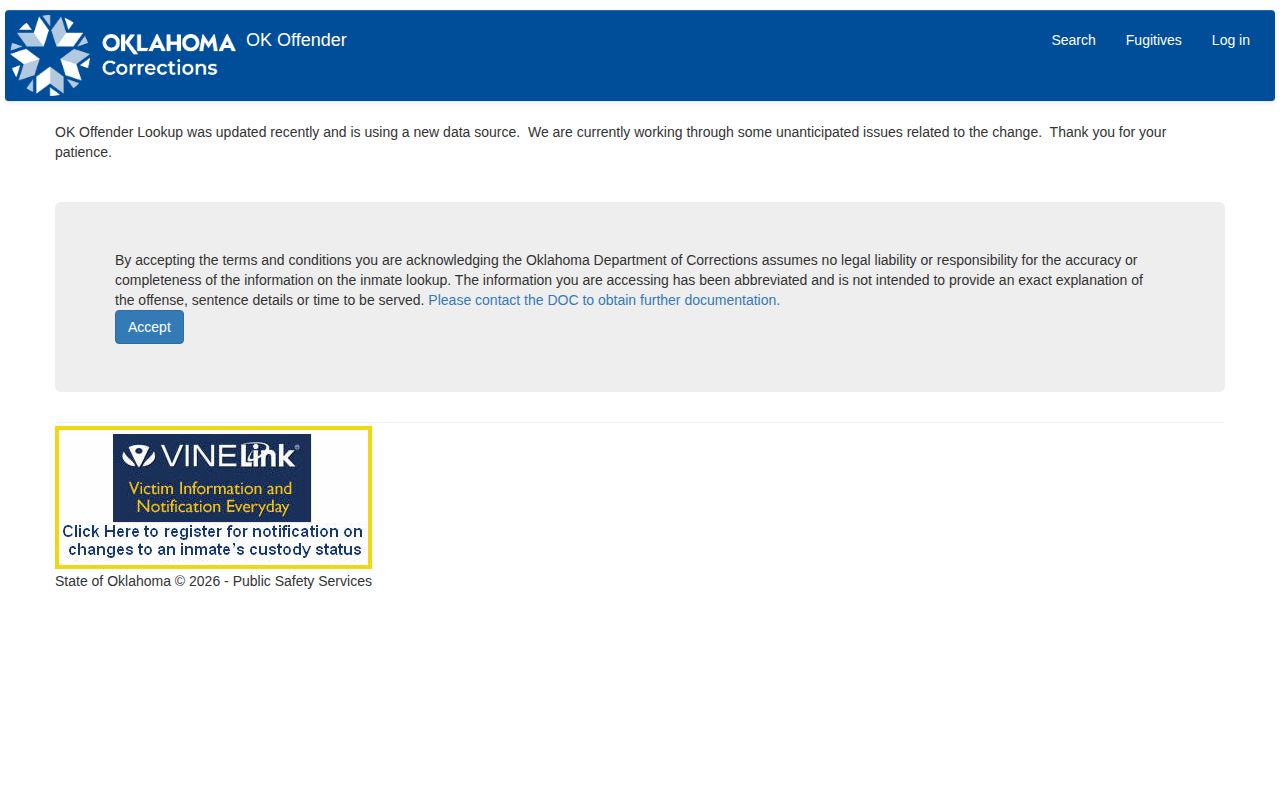
The returned profile must be matched by more than a shared name, then read for its actual status rather than assumed release.
ODOC Released Inmate Search
Former offenders can remain discoverable in the public ODOC search. Search by ODOC number when known or use the name fields, then compare the photograph, age or identity details, offenses, and status. A record may distinguish incarceration, community supervision, and discharge. Historical fields differ by profile. The deeper ODOC offender search instructions explain how a public snapshot differs from a formal release document.
The ODOC Offender Info page links the lookup and explains the agency's release-date limits.
A displayed projected date is tentative, not an actual release certificate or a guaranteed appointment.
Oklahoma Court Release Context
The Oklahoma State Courts Network supports statewide searches by court or county, case number, party, date-of-birth range, case type, filed or closed date, traffic citation, and appellate lower-court number. A criminal docket may show bond orders, pleas, judgment and sentence, jail credit, suspended or deferred terms, dismissal, revocation activity, and case closure. It helps explain why custody changed.
The OSCN docket search presents those statewide search fields.
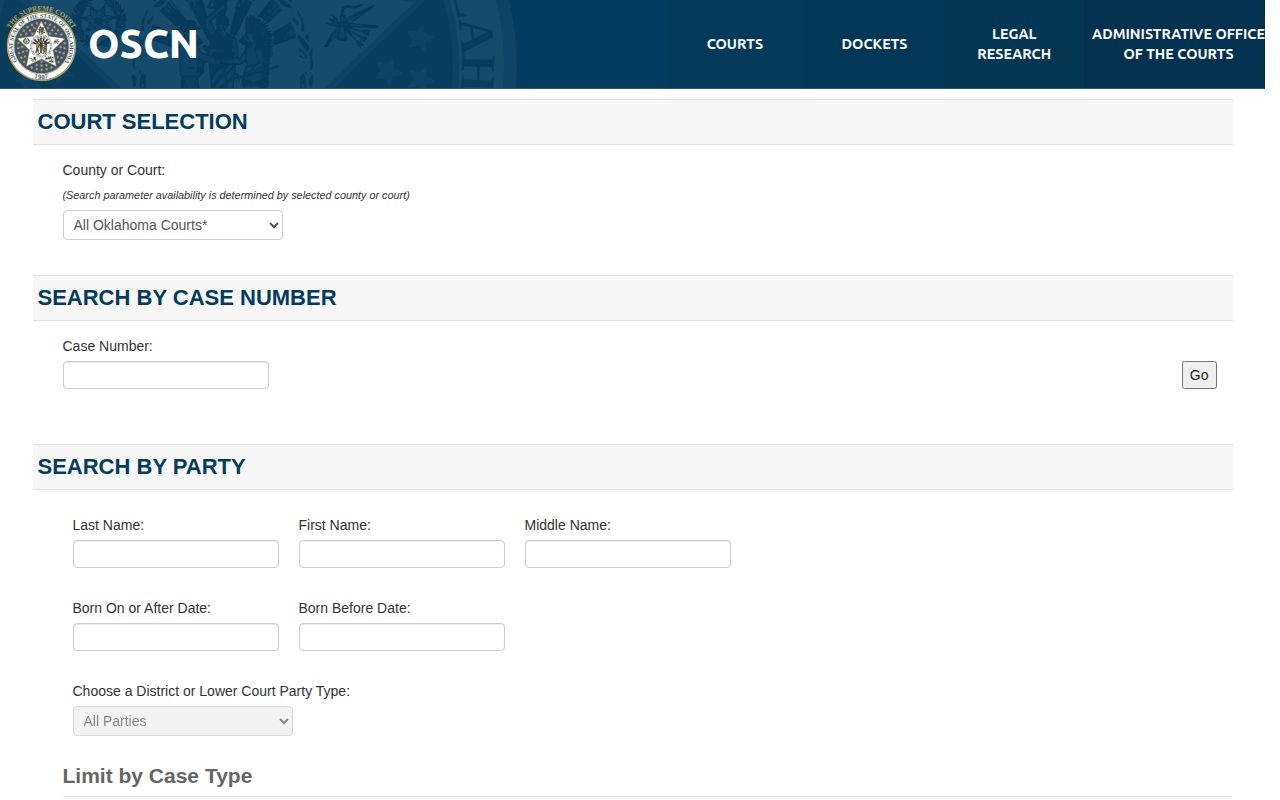
OSCN warns that its web display is not the official record, so certified material comes from the court clerk.
Municipal and tribal matters may use systems outside OSCN. No OSCN result should therefore be described as proof that no Oklahoma case exists. Start with the court named on the booking or sentence record, then ask that clerk for the official order. Court closure, dismissal, deferred sentencing, and discharge from custody are also different events and should retain their own labels.
Oklahoma Release Supervision
ODOC Probation and Parole Services administers statewide community supervision. Its public offender profile is the first check for probation, parole, community sentencing, or another ODOC status. Parole and probation are not the same. Parole follows a prison sentence; probation is a court-ordered community sentence or part of one. Inactive supervision also does not necessarily mean the sentence is discharged.
ODOC's July 28, 2025 point-in-time report counted 22,780 people in community-supervised categories: 17,603 probation, 2,978 parole, 2,068 community sentencing, and 131 GPS-inmate. These are dated categories, not a current person lookup. A PPB result can show a decision, while ODOC status and later release records show what happened afterward.
The PPB meeting archive shows the calendar side of parole review.
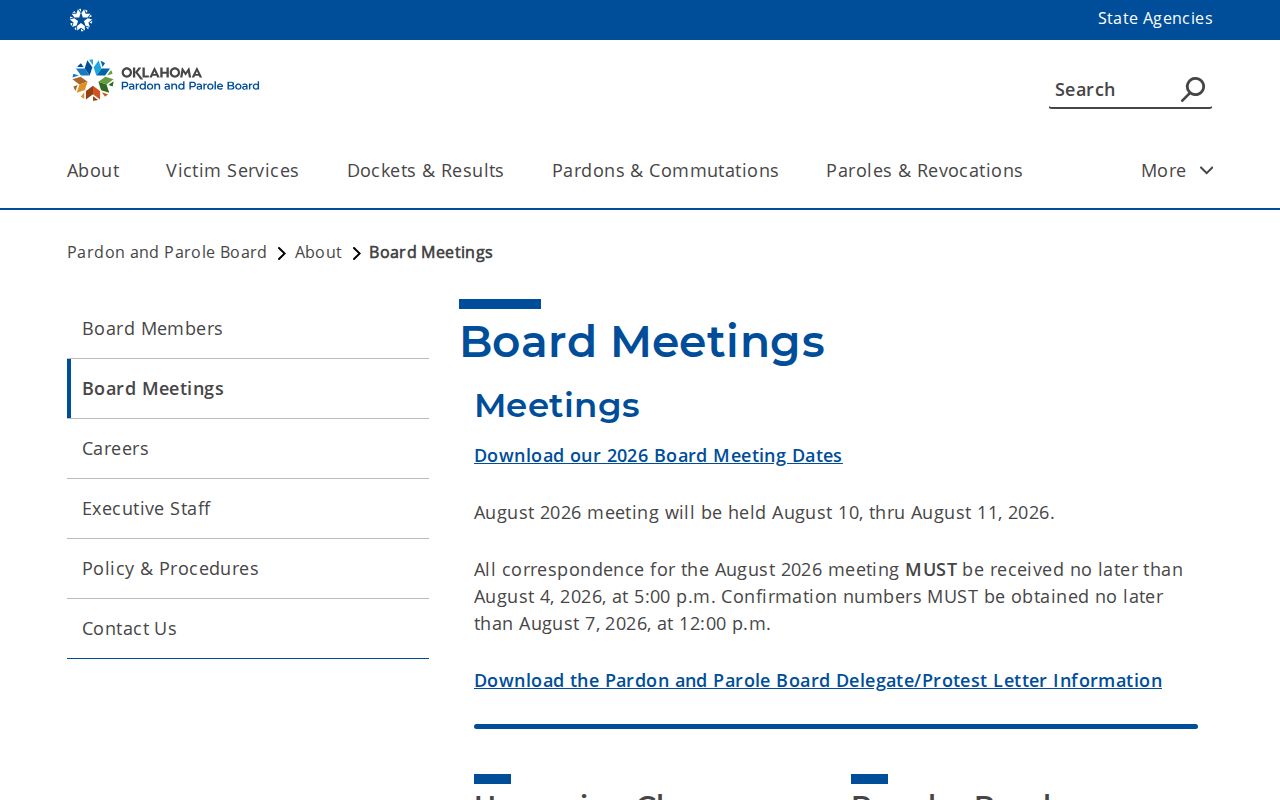
A meeting date is one milestone and does not prove that physical release occurred that day.
Oklahoma Release Notifications
OK VINE supports a specific-person custody check and confidential registration for available status notices. Choose Oklahoma, search by exact name or offender ID, narrow by reporting agency when possible, and compare identity fields. A released result supports that the named reporting custodian recorded a release event. It does not prove acquittal, sentence completion, or the absence of a hold elsewhere.
The official VINELink interface begins with state selection and a person search.
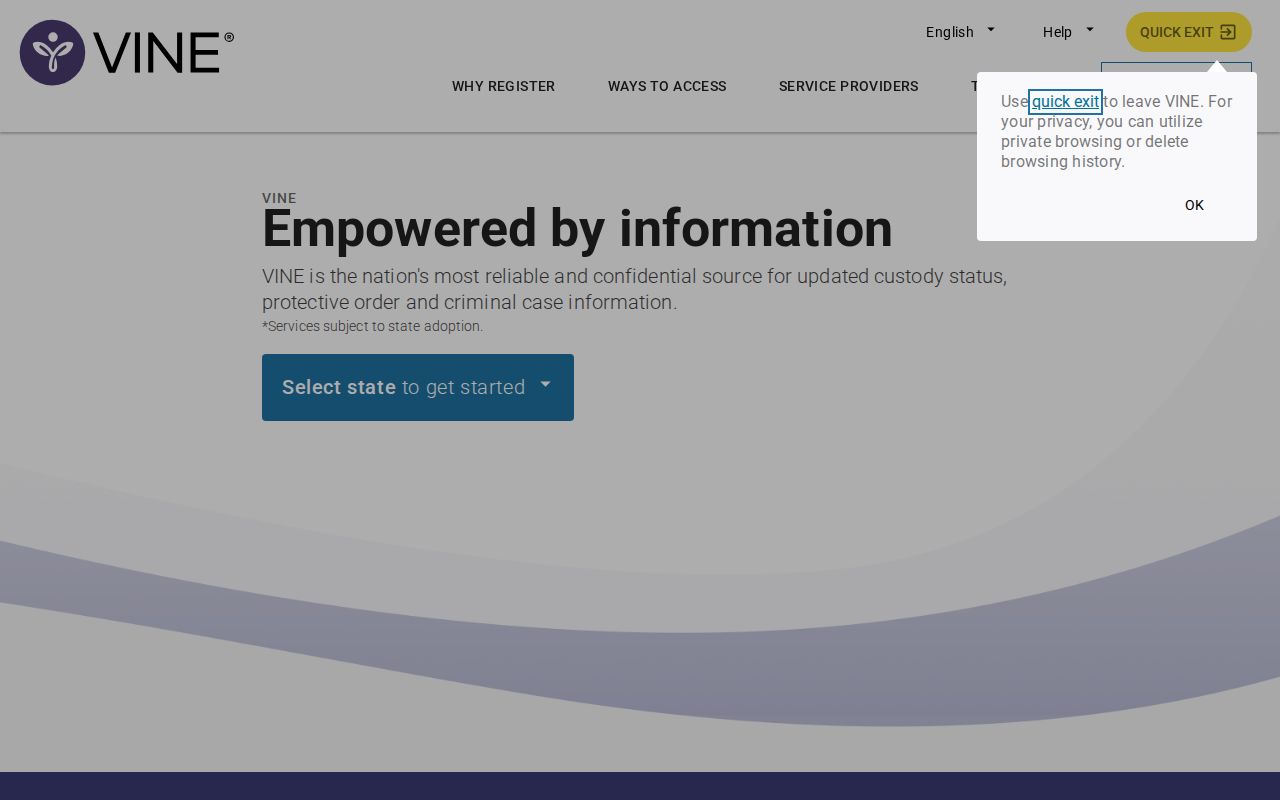
Custody notice is separate from PPB parole-proceeding notice, and automation should not be treated as guaranteed legal notice.
Federal Releases in Oklahoma
The BOP Inmate Locator covers federal prisoners, generally for online records from 1982 forward. Search by register number when known or by name with age, race, and sex filters. A result saying Released or Not in BOP Custody means the person is not presently in BOP custody. It does not rule out supervised release, Oklahoma or local custody, ICE custody, or a record outside the locator's online period.
The BOP Inmate Locator is the federal search, including releases tied to FCI El Reno and the Federal Transfer Center in Oklahoma City.
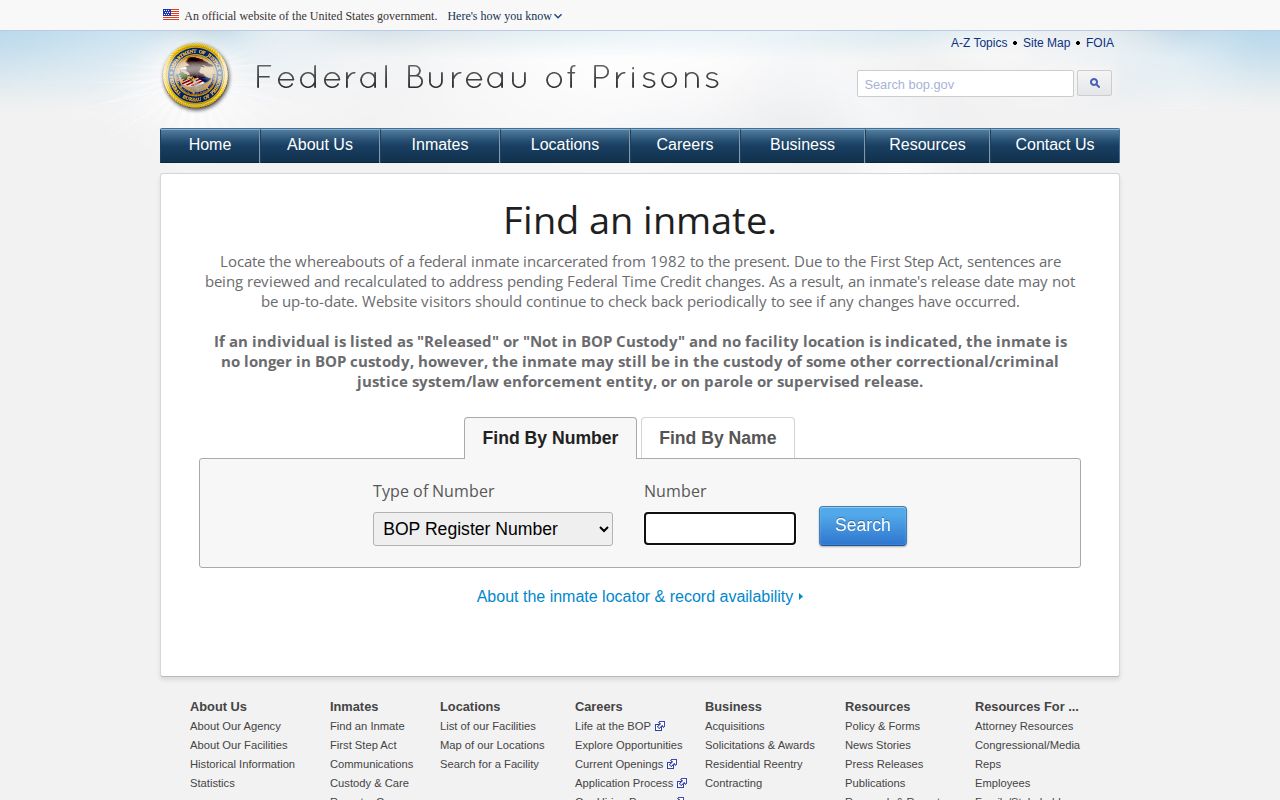
A transfer-center departure often continues federal custody, so the result wording and destination control.
ICE's locator is narrower. It seeks people currently in ICE custody or held by CBP for more than 48 hours and excludes people under 18. A blank result can reflect timing, spelling, scope, or safety limits. A county notation of released to ICE means a custodian transfer, not community release.
Four Oklahoma Not-Found Results
A blank county roster, ODOC search, BOP locator, and ICE locator answer four different questions. The county roster may omit a completed booking. ODOC does not promise fixed public retention for every discharged profile. BOP's online span generally begins in 1982. ICE ODLS is a present-custody tool with intake and display limits. None is a universal name search.
The right response is to trace the last custodian. Request the county release sheet, ODOC Closed Records document, older BOP record, or ICE follow-up that fits the case. That decision tree is more reliable than converting one blank screen into a release claim.
The PPB Dockets & Results archive offers another dated decision record for parole cases.
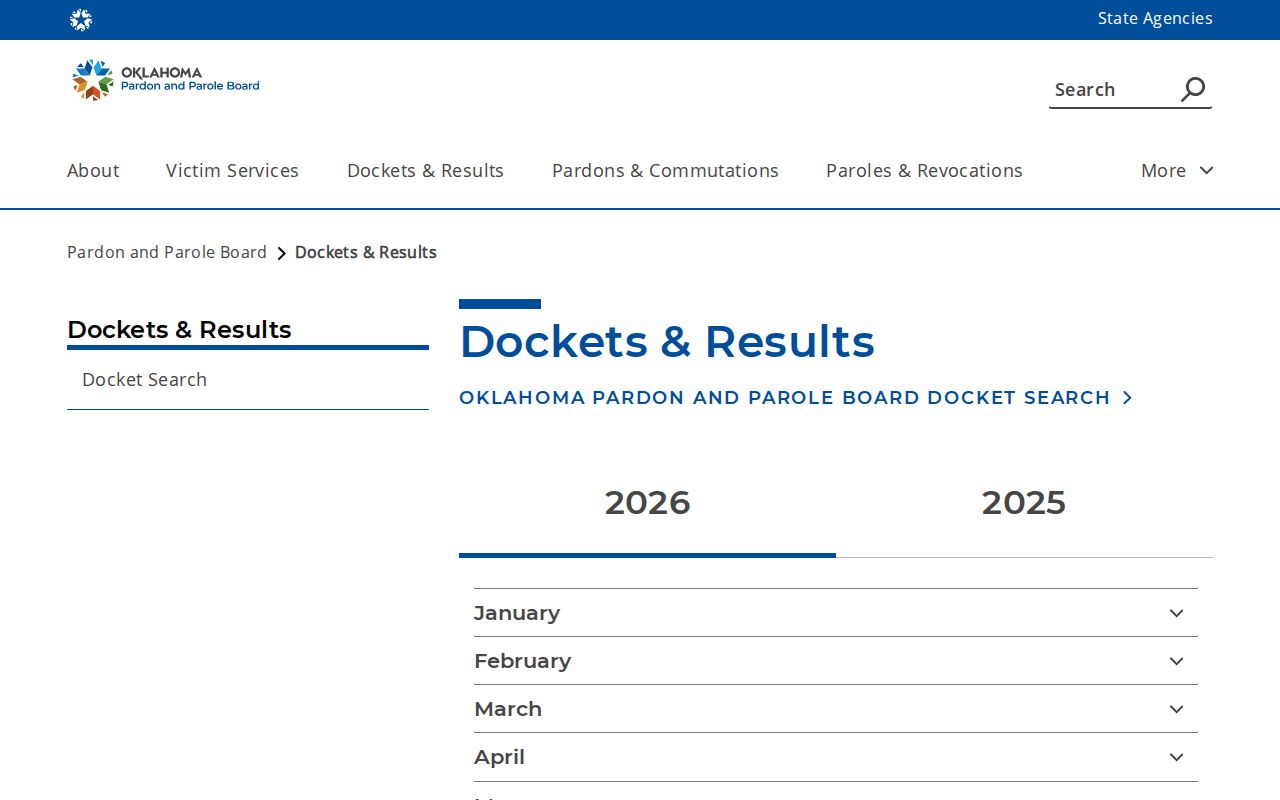
Search paired monthly PDFs by ODOC number, then follow any favorable result through ODOC for actual custody movement.
Aliases and data timing add another check. A person may be booked under a full legal name, a shortened first name, or a different surname format. Search the agency identifier first when one is known. If only a name is available, compare the date range, age, court case, booking number, and agency shown by each candidate result. Do not merge two people's records to fill a gap.
Keep a short source log while resolving the record. Note the portal, date checked, exact status words, listed agency, and any event time. That practice preserves the distinction between what an official screen displayed and what was inferred later. It also makes a focused public-record request possible when the online result lacks the needed release manner or receiving authority.
Oklahoma Release Facility Routes
Oklahoma's 77 county sites cover each county's primary detention facility, while the statewide roll-up also includes municipal jails, juvenile facilities with access caveats, ODOC prisons and community centers, federal institutions, ICE-linked sites, and historical facilities. Ownership controls the record. County and municipal releases use local records, ODOC releases use state records, federal releases use BOP, and ICE movements use immigration custody channels.
The Oklahoma Facility Directory links every verified covered facility page and leaves the two uncovered community placements as researched plain-text entries. A facility row identifies where to start; it does not promise that the facility publishes a historical release feed.
State prisons and community-corrections centers need special care because their discharge path is not a county recent-release list. Confirm the ODOC number, profile status, any applicable projected date, a PPB action when parole was considered, and the later status or release document. The Federal Transfer Center in Oklahoma City is chiefly a transfer hub, so many departures remain within federal custody. A USMS or ICE movement likewise requires a check of the receiving system.
Juvenile rows are present for directory completeness, but adult public-search rules do not apply to youth records. Historical and closed facilities also remain useful only as routing context. Their old pages should point to the custodian of archived records, not imply that a current prisoner can be found at a closed site.