
Oklahoma Parole Board Records
The Oklahoma Pardon and Parole Board, commonly called PPB, publishes two related sources. Its Board Meetings page is the annual calendar and meeting archive. It carries regular business meeting material, agendas, minutes, and special clemency hearing entries. The Dockets & Results archive organizes person-level PDFs by year and month. The calendar answers when the Board plans to meet. A docket answers who is set for a listed proceeding. Results report what the Board recorded afterward.
Those records sit between a sentence and a later release. PPB handles parole consideration and recommendations under the governing law. ODOC keeps custody and sentence records, processes an approved movement, and later supervises a person released to parole. Some matters also require final action outside the Board. Never turn a PPB vote into an assumed gate date. Confirm the later status through ODOC or the agency release document.
The official Oklahoma PPB meeting archive displays the schedule and the files posted around each session.
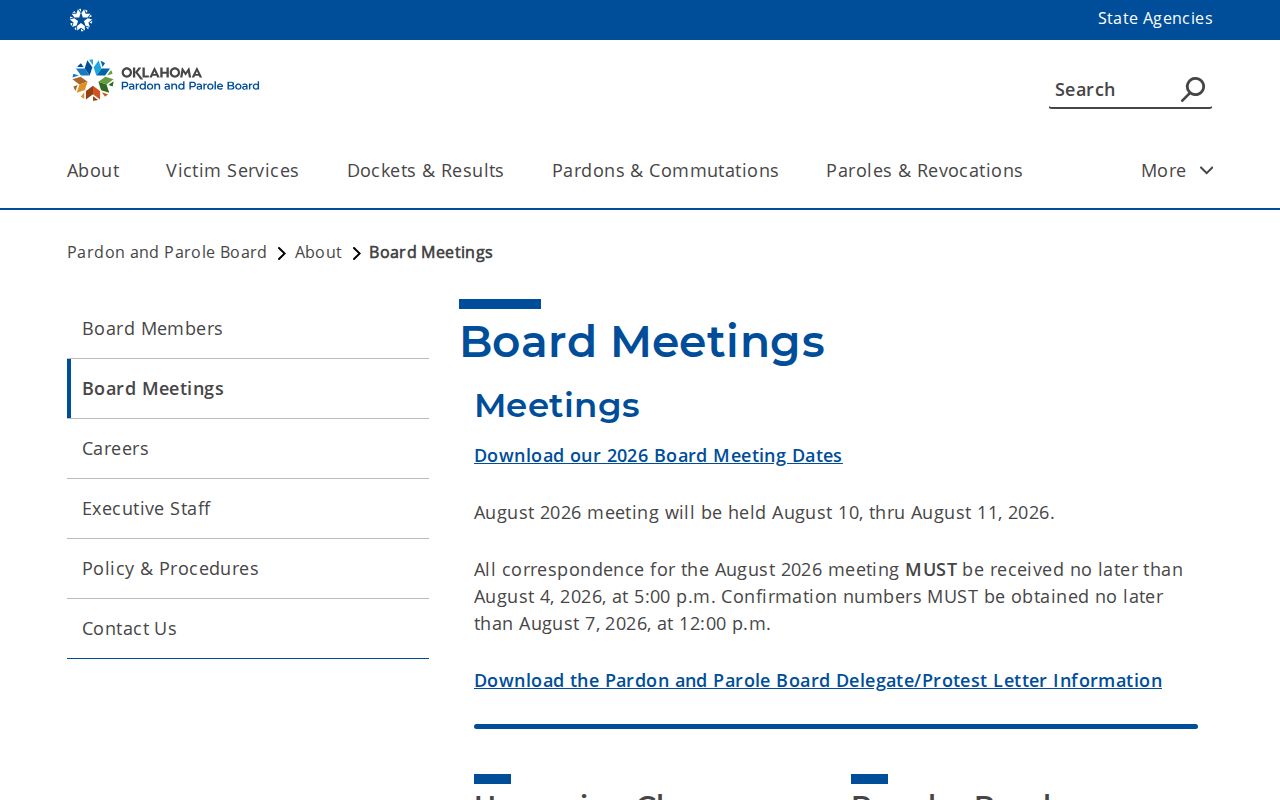
Check its modification date and current entries because meeting material can change as the monthly cycle develops.
Find an Oklahoma Parole Hearing
Begin with identity, not a name search across every PDF. Find the person in OK Offender Lookup and record the ODOC number. It is the strongest public key for avoiding same-name errors. Next, identify the likely consideration month from the Board archive or known case material. Dockets can cover parole, administrative parole, SIR, commutation, and pardon matters. Those tracks are not interchangeable, so open the document that matches the proceeding.
Use this process for an Oklahoma parole hearing date:
- Search OK Offender Lookup and confirm the ODOC number against the photograph, age details, offense, county, and sentence shown.
- Open PPB Dockets & Results and select the correct year and month.
- Choose the docket type that matches parole, administrative parole, SIR, or the other listed proceeding.
- Search the PDF for the ODOC number, then confirm the name and listed details.
- Compare the docket date with the current Board Meetings page before relying on the schedule.
- Record the docket title, meeting date, document date, and lookup date so later changes remain clear.
A docket entry means consideration was scheduled. It does not say the matter was heard exactly as planned, that parole was granted, or that release followed. A cancellation, deferral, removal, or later posting may change the trail. Date-stamp the result and return to the archive after the meeting.
The ODOC offender lookup provides the number-based identity check used before opening a PPB PDF.
Match more than the name, since a wrong identity makes every later docket and decision conclusion unreliable.
Note: A name on an Oklahoma parole docket confirms scheduled consideration, not approval, final action, or physical release from custody.
Find an Oklahoma Parole Decision
After the meeting, return to the same month in Dockets & Results. Open the matching results PDF, not a nearby month or a different proceeding type. Search again by ODOC number. Then read the document’s own key before interpreting the notation. PPB files can distinguish favorable action, denial, pass or defer, strike or removal, a recommendation, and other proceeding-specific results. The key in that file controls. A label borrowed from another month or another docket type can change the meaning.
Follow a second short sequence:
- Open the result paired with the exact docket month and type.
- Search by ODOC number, then verify the person’s name.
- Read the legend and copy the precise result language.
- Determine whether the entry records final Board action or only a recommendation or stage.
- Check ODOC and available custody notifications for a later movement.
- Keep the Board date separate from the later release or status-change date.
The PPB Dockets & Results page places monthly source documents in paired groups.
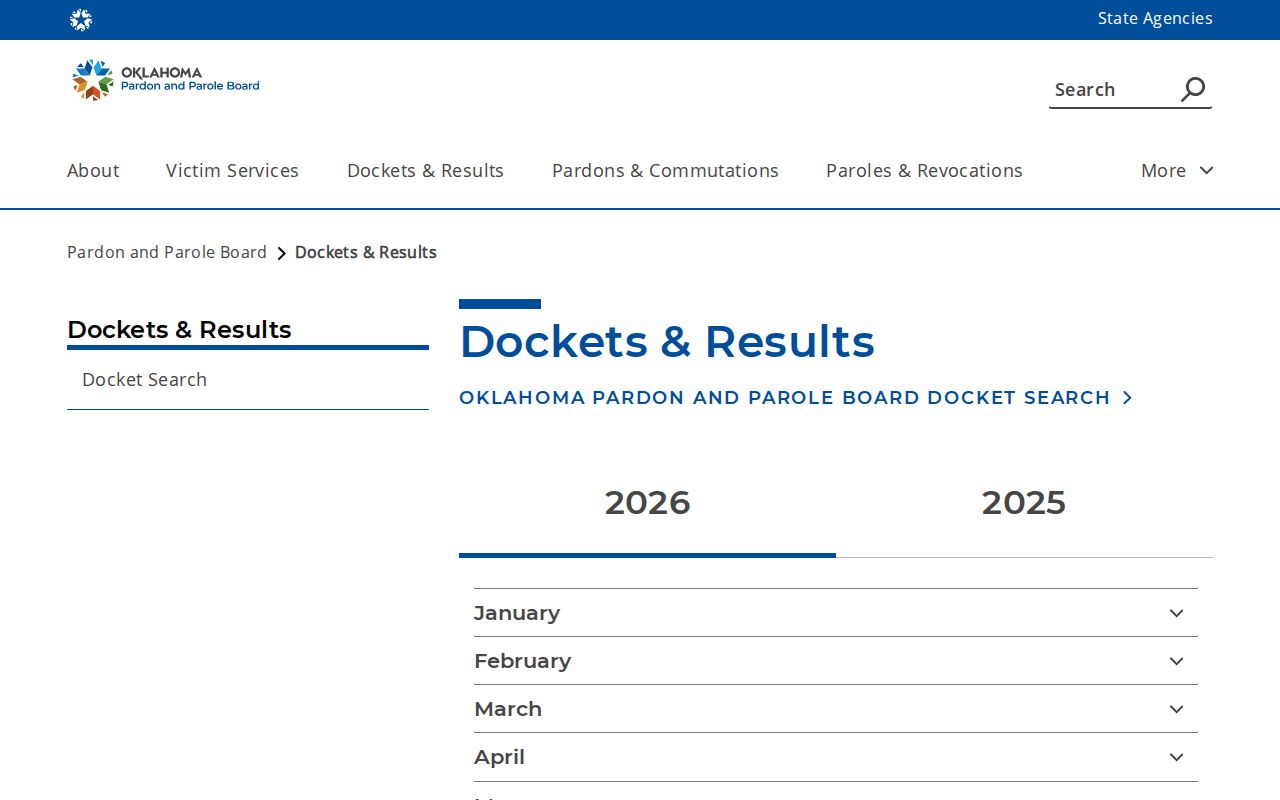
The archive structure makes the year, month, docket type, and result key part of a sound person-level search.
If the result is favorable, use the ODOC offender search to verify the later custody status. Placement conditions, processing, a hold, or required final action may remain. The Board record documents what PPB did, while ODOC documents custody and supervision.
Oklahoma Parole Hearing Outcomes
Outcome terms must remain tied to the specific PPB legend. Oklahoma’s archive covers more than a single yes-or-no parole vote. Administrative parole, SIR, commutation stages, and pardon matters may have their own keys and next steps. The safest method is to quote the notation, name the document, and explain only what that source establishes.
| Result type | What the record establishes | Next check |
|---|---|---|
| Favorable action | The Board recorded favorable action under that docket’s key | Determine whether further action, conditions, or ODOC processing applies |
| Denied | The listed request was not approved at that proceeding | Use the record and governing process for any later consideration date |
| Pass or defer | The matter did not reach a final result on the expected schedule | Look for the reason or a later docket without guessing |
| Strike or removal | The item was taken off that docket under its stated notation | Check later Board records and the exact legend |
| Recommendation | PPB recorded a recommendation rather than necessarily final executive action | Find the required later decision, then verify ODOC status |
Does a grant prove release? No. It proves the action described by the result. Physical release is a later ODOC event, and discharge can be later still. Save both dates rather than merging them.
- Docket
- The published list of matters scheduled for a proceeding.
- Result
- The Board’s posted record of action after the proceeding.
- Recommendation
- Board action that may still require another decision before it is final.
- Discharge
- The end of ODOC jurisdiction on the identified sentence, distinct from parole release.
Oklahoma Dockets Are Paired Snapshots
Oklahoma’s monthly docket and result pair is a distinctive records system. The docket is the before snapshot. It shows that a named ODOC record was scheduled for a type of consideration. The result is the after snapshot. It reports the Board’s action using that document’s key. Neither is a permanent person profile, and neither alone proves the later prison departure.
Search both PDFs by ODOC number. This limits name collisions and lets the same case be compared across the pair. Keep the meeting page open too. Agendas, minutes, regular meetings, and special clemency hearings can appear there as the archive changes. As checked during the statewide research, the meeting page had been modified shortly before a listed regular meeting. That fact shows rolling maintenance, not a guaranteed posting hour for all future files.
Save the source files when a dated public record is needed, subject to the agency’s access terms. Later updates can replace a tentative calendar view or add the result that did not exist on the first visit. A clean record trail identifies what was known at each point: scheduled consideration from the docket, action from the results, and custody movement from ODOC. That order also makes a correction easier if the wrong month or a same-name entry was first selected.
The OSCN statewide court search supplies a separate view of the sentence and filed case events.
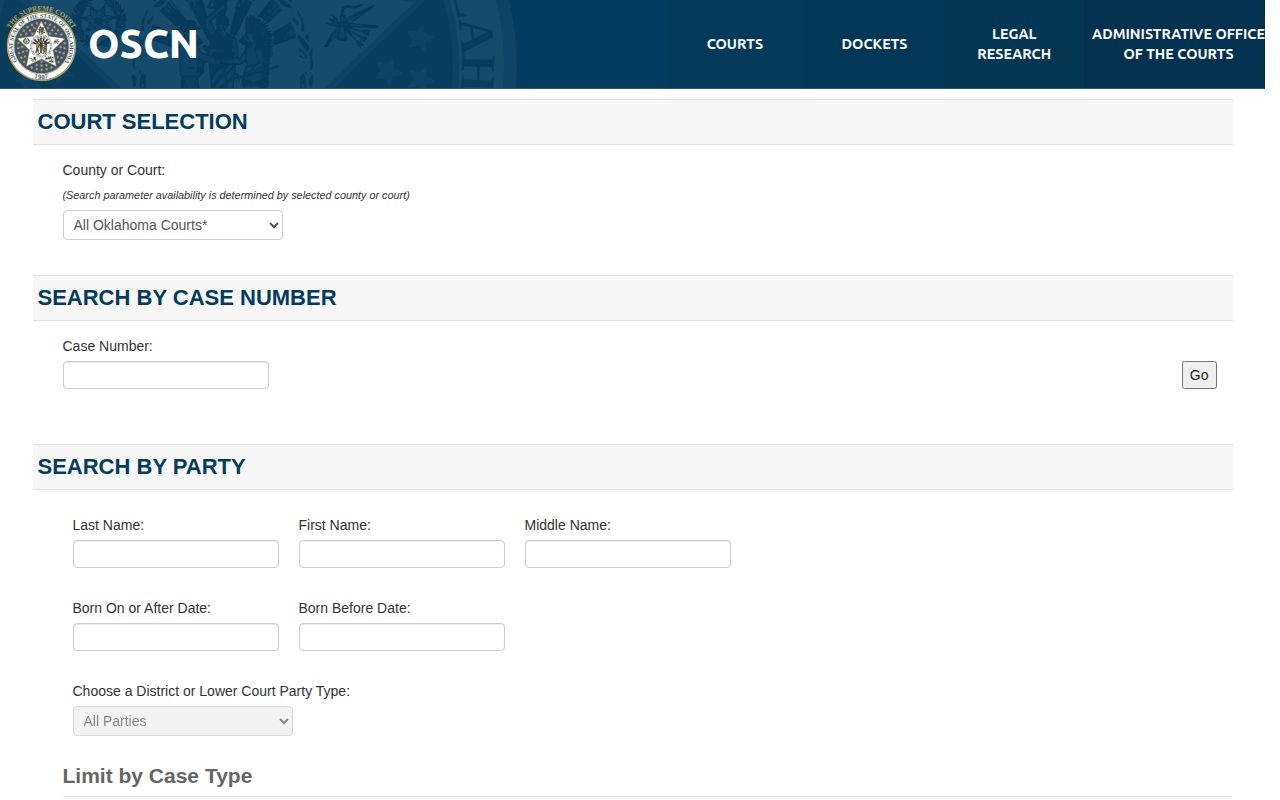
A court docket may explain a sentence or later order, but OSCN says its online display is not the certified court record.
Note: Board PDFs, court dockets, and ODOC profiles are complementary records, and no one source should silently replace the others.
Oklahoma Parole Eligibility Rules
Eligibility permits consideration. It does not guarantee a docket result or release. The main Oklahoma framework is 57 O.S. § 332.7, and the offense date matters. For crimes committed from July 1, 1998, through October 31, 2018, subsection B generally uses one-third of the sentence, with exclusions and other limits. For crimes committed on or after November 1, 2018, subsection C generally uses one-fourth of the sentence or consecutive aggregate. Administrative parole has additional exclusions.
Specified violent or covered cases can require two-stage review. Separate law in 21 O.S. § 13.1 lists offenses subject to the 85-percent floor. That list is not shorthand for every felony. The conviction statute, offense date, sentence structure, and exclusions must be matched to the law that controls the person’s case. “One third,” “one fourth,” and “85 percent” refer to different cohorts and cannot be blended into one rule.
Several clocks can therefore exist at once: a parole eligibility date, a docket date, a Board action date, a projected sentence date, and an actual custody movement. Consecutive sentences can affect the aggregate. A docket-date appeal mechanism is available through PPB forms and resources when the listed calculation is disputed. Use the official record rather than creating a release date from sentence length alone.
Oklahoma Parole and Clemency Records
PPB’s archives include matters beyond ordinary parole. The meeting page can list special clemency hearings, while Dockets & Results may offer commutation and pardon documents alongside parole, administrative parole, and SIR material. A commutation request seeks a change to a sentence through the applicable process. A pardon is a separate form of executive forgiveness. Neither term is a synonym for acquittal, expungement, immediate release, or the end of every correctional record.
Document type is therefore part of the answer. A Stage One commutation entry should not be described as a parole grant. A favorable recommendation may still require later action before it becomes final. A pardon matter often concerns relief after the conviction process and does not, on its own, identify a prison gate event. Quote the proceeding name, stage, result notation, and date. Then identify the later official record that answers the actual custody question.
Search these records with the same care used for parole. Confirm the ODOC number first, select the correct month and document type, and read the file’s legend. If the meeting was a special hearing, compare the docket or result with the agenda and minutes on the Board Meetings page. Finally, check ODOC for any later custody or sentence-status change. This sequence prevents a broad word such as “clemency” from obscuring what the Board actually did.
Oklahoma Parole Posting Cadence
OAC Title 515 provides the formal publication rhythm. Regular monthly dockets are to be online at least 20 days before the meeting. Supplemental dockets are to appear at least 10 days before consideration. Results must be posted in a timely way, no later than 20 days after the meeting, and retained online for at least 60 days. The rules also allow a caller to seek the recommendation for a specific applicant or inmate after 2 p.m. on the Monday following a meeting.
That cadence is a records rule, not a promise that every calendar page stays unchanged. Special meetings, cancellations, supplemental items, or later documents can alter what appears. Save the source date, recheck before travel or reliance, and do not treat the absence of an immediate result as a denial. If an older file has left the online retention window, request the existing public record from PPB rather than guessing what the past notation said.
Once release to parole is confirmed, the Board is no longer the main source for day-to-day community status. ODOC Probation and Parole Services runs supervision. The Oklahoma parole and probation page explains office verification, interstate transfers, warrant cautions, and the difference between inactive supervision and discharge.